
Reviewed · WALKING TOURS
Dubrovnik: Early Bird Walking Tour
Dubrovnik is best before breakfast. This 90-minute walk lets you see the Old Town before the cruise-day crowds arrive, with a licensed local guide leading you through the lanes, squares, churches, and stories that give the city its character. I like the empty Stradun and the use of side streets that locals know. I also like the short format, which gives you a useful first look without taking over your day.
The main drawback is the early start. You need to reach the Amerling Fountain beside Dubravka restaurant at first light, and the tour covers a lot in 90 minutes. It is an overview, not a slow visit inside every monument, and it does not include a walk on Dubrovnik’s city walls.
In This Review
- Key points to know before booking
- Why early morning changes Dubrovnik
- Meeting at Amerling Fountain beside Pile Gate
- Fort Lovrijenac and the first Dubrovnik view
- Pile Gate and Large Onofrio’s Fountain
- Stradun before the city wakes up
- Orlando’s Column and Sponza Palace
- Rector’s Palace and Dubrovnik Cathedral
- Gundulić Square and Ulica od Puča
- The guides make the short format work
- Is $23 a fair price?
- Who should book the Early Bird walk?
- Practical tips for getting more from the morning
- Final verdict: book it for orientation and quiet streets
- FAQ
- How long is the Dubrovnik Early Bird Walking Tour?
- What time does the tour start?
- Where does the tour meet?
- How will I identify the guide?
- What language is the tour in?
- Is the tour wheelchair accessible?
- What is included in the price?
Key points to know before booking
- See Stradun before the crowds: The polished main street is at its most peaceful early in the morning.
- Start beside Pile Gate: Meet at Amerling Fountain, next to Dubravka restaurant, where the guide carries a blue umbrella or an Early Bird sign.
- Hear local stories, not just dates: Guides such as Mihaela, Daniela, Davor, Andreja, Jelena, and Anna have been praised for connecting history with daily life and personal insight.
- Cover the Old Town’s main sights: The route includes Onofrio’s Fountain, St. Blaise’s Church, Sponza Palace, Rector’s Palace, the cathedral, and more.
- Allow for heat and uneven streets: Comfortable shoes matter, and the early hour is especially useful in summer.
- Pay $23 for a focused introduction: That is fair value if you want orientation, history, and crowd avoidance in one compact outing.
Why early morning changes Dubrovnik

Dubrovnik’s Old Town can feel very different at 8 a.m. than it does later in the day. At first light, the narrow streets are quieter, the main thoroughfare is easier to admire, and your guide does not need to compete with a wall of conversation around every stop.
The timing also helps with summer heat. One guide, Mihaela, made a point of stopping in shaded places during a very hot morning. That is a small detail, but it shows why this tour works better early than at the busiest part of the day.
You will not have the city entirely to yourself. Dubrovnik is a working town, and residents still move through the Old Town before the sightseeing crowds appear. That is part of the appeal. You get a glimpse of ordinary morning life rather than only the postcard version.
The early hour may be the most valuable feature here. Many people book a walking tour to understand the city, then lose patience when the streets become packed. This experience gives you the basic story first, before you return later to explore the places that catch your eye.
More Walking Tours in Dubrovnik
- Dubrovnik: Old Town Walking Tour
★ 4.8 · 5,174 reviews - Dubrovnik Discovery Old Town Walking Tour
★ 5.0 · 4,458 reviews - Dubrovnik: Game of Thrones Walking Tour
★ 5.0 · 1,732 reviews
Meeting at Amerling Fountain beside Pile Gate
The meeting point is Amerling Fountain, next to Dubravka restaurant and close to the main entrance at Pile Gate. Look for a guide with a blue umbrella or an Early Bird sign.
This location is practical because Pile Gate is one of the clearest entrances to the Old Town. Arrive with comfortable shoes already on. The route uses stone paving and narrow lanes, and the pace is a walking pace rather than a seated history talk.
The tour is in English, and the guide is live rather than audio-recorded. That makes a real difference in a compact group. You can ask about Croatia, Dubrovnik, local customs, restaurants, or the places you pass. Guides have also offered suggestions for other activities and places to eat after the walk.
Do not expect hotel pickup, food, or drinks. Bring water, especially in the warmer months, but remember that the early start should make the walk more manageable than a late-morning outing.
Fort Lovrijenac and the first Dubrovnik view
The walk begins with a view toward Fort Lovrijenac. Perched outside the Old Town walls, the fort gives your guide a strong opening point for explaining Dubrovnik’s defensive position and its long relationship with the sea.
You mainly receive an introduction and viewpoint here, not a full fort visit. That is useful to know if you want to explore Fort Lovrijenac in detail. The stop works as a visual orientation: you see an important defensive landmark, then head into the city where the rest of the tour unfolds.
This opening also gives the guide room to explain how Dubrovnik developed as a fortified city. The approach is not just a list of rulers and battles. The strongest guiding style on this walk connects the city’s past with the people who live there now.
Davor, one of the praised guides, was especially good at explaining Dubrovnik from the point of view of its citizens. That kind of angle can make old stones easier to understand. You begin to see the Old Town as a home and workplace, not only as a monument.
Pile Gate and Large Onofrio’s Fountain
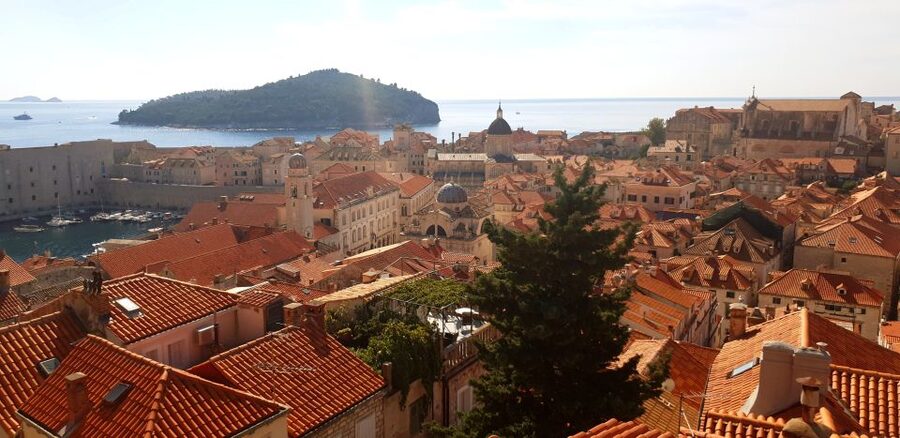
At Pile Gate, the guide introduces the main entrance and the transition from modern Dubrovnik into the Old Town. This is a short stop, but it matters because it helps you understand how visitors have entered the city and why the gate remains such a busy starting point.
From there, the route reaches Large Onofrio’s Fountain for about ten minutes. The fountain is one of the Old Town’s most recognizable meeting points, and its location makes it an easy reference for the rest of your stay.
This is a good place to listen for the practical side of Dubrovnik’s past. Water, movement, trade, defense, and public space all meet in this part of the city. Your guide can give the fountain more meaning than a quick photograph would.
The route does not ask you to spend a long time at each sight. If you prefer detailed architectural study, you may want to return later with your own guidebook. For a first orientation, the short stops keep the morning moving.
Something different for another day:
- Blue Cave Small-Group Boat Tour from Dubrovnik
★ 5.0 · 9,360 reviews - Full-Day Dubrovnik Elaphite Islands Cruise with Lunch and Drinks
★ 5.0 · 8,823 reviews - Dubrovnik: Epic Game of Thrones Tour + Lokrum & Saver Option
★ 4.9 · 5,995 reviews - Dubrovnik: Elaphiti Islands Full-Day Cruise with Lunch
★ 5.0 · 5,938 reviews
Stradun before the city wakes up
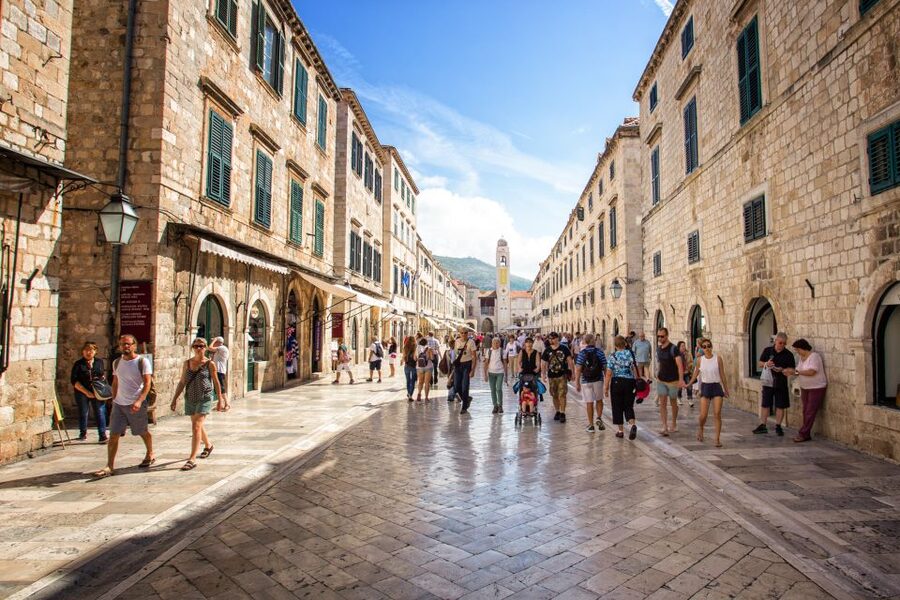
Stradun is the star of the early schedule. Dubrovnik’s main street is known for its pale, shiny stone surface and handsome buildings, but the experience changes when you can walk along it without heavy foot traffic.
You have roughly 15 minutes here, enough time to take in the scale of the street and hear stories about its legends and curious details. This is one of the best reasons to book the early departure. Later, Stradun can become a slow-moving stream of people. Early in the day, you can see its clean lines and proportions.
The guide helps turn the street into more than a pretty corridor. Stories about local life, old customs, and the city’s changing fortunes give the buildings a human side. Sarah, who joined an early tour, particularly valued the local stories and the guide’s interest in food and culture.
I would use this stop to get your bearings. Notice how side lanes branch off from the main street. Pay attention to which squares and buildings you want to revisit after the tour. Several people found the walk useful precisely because it helped them choose where to spend the rest of their day.
Orlando’s Column and Sponza Palace
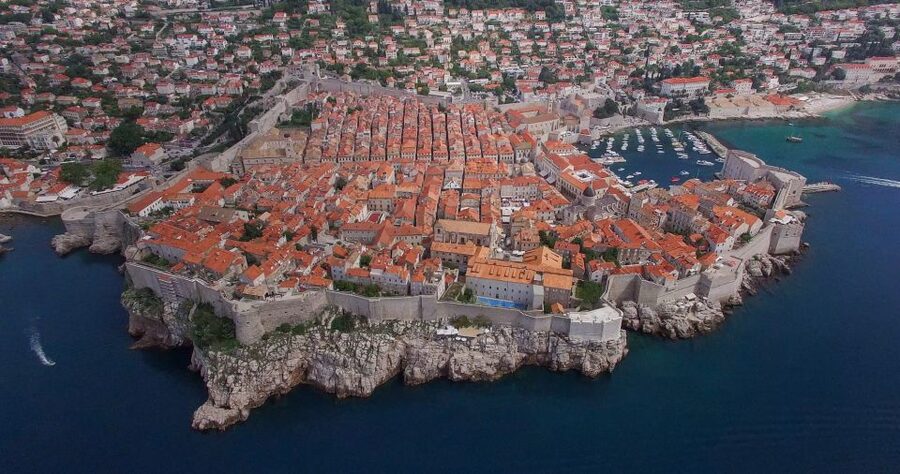
Orlando’s Column receives a brief five-minute stop. It is a small but important landmark in the center of Dubrovnik, and the guide uses it to explain symbols of the city and the public life that once gathered around this area.
The short timing means you will likely hear the key points rather than every detail. That is fine for an overview, but anyone fascinated by civic symbols may want to ask a follow-up question.
Sponza Palace gets about ten minutes. Its elegant facade makes it one of the Old Town’s most attractive buildings, and its position near the main square makes it easy to connect with other major sights.
Listen for the building’s role in Dubrovnik’s organized public and commercial life. The value of a local guide is that the palace becomes part of a larger story, rather than another beautiful facade in a long procession.
At this stage, you also begin to see the tour’s method. The guide uses major landmarks to establish the city’s public story, then shifts into side streets for smaller details. That balance keeps the walk from becoming a simple checklist.
Rector’s Palace and Dubrovnik Cathedral
Rector’s Palace is another ten-minute stop and one of the most important buildings on the route. Its presence opens a window onto Dubrovnik’s political life and the people who governed the old republic.
The guide’s job here is to give you enough context to understand the building’s importance without turning a 90-minute walk into a lecture. The best guides on this experience have been praised for making difficult parts of Croatian and Dubrovnik history clear through anecdotes, questions, and personal stories.
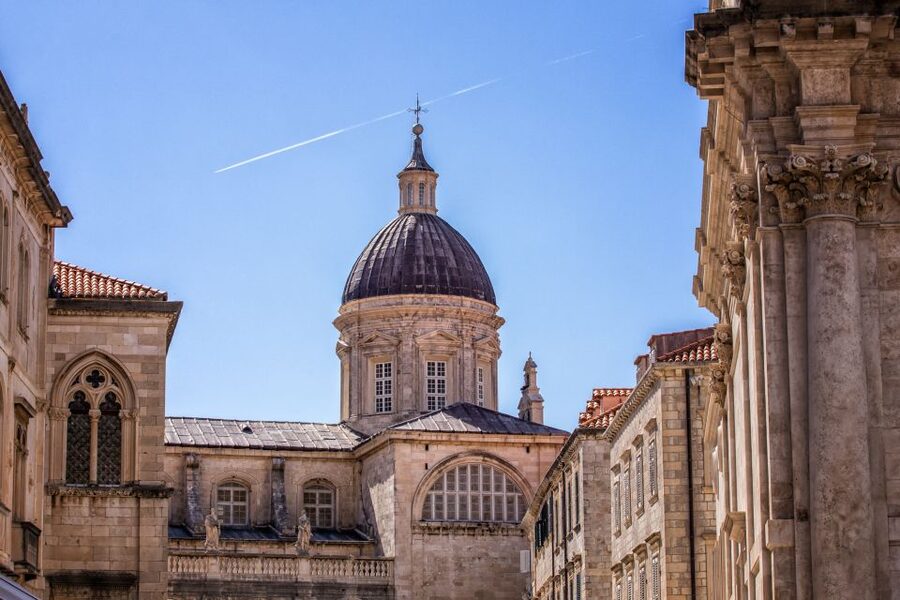
The cathedral follows, also with about ten minutes. This is a chance to hear about the religious life of the city and to connect the cathedral with the other churches you pass through the Old Town.
The route includes St. Blaise’s Church among the city highlights, although the timed itinerary gives specific stops to the cathedral and other sites. You should expect exterior sightseeing and guided explanation rather than a guaranteed extended interior visit at every church.
That distinction matters. The tour is designed to show you the city’s structure and meaning. It is not a museum tour, and admission to attractions is not listed as included.
Gundulić Square and Ulica od Puča
The Monument to Ivan Gundulić receives the longest stop, about 15 minutes. This gives the guide more room to talk about culture, literature, public life, and the way Dubrovnik remembers its important figures.
The stop also helps break up the grand political and religious sights. Dubrovnik is not only forts, palaces, and churches. Its identity includes writers, markets, food, neighborhood routines, and local pride.
The final stretch follows Ulica od Puča, a side street known mainly by locals. This is where the tour feels less like a march between famous landmarks and more like a look at how the Old Town functions day to day.
You may pass through lanes that many first-time visitors miss. They are not necessarily grand or dramatic. That is exactly the point. The guide can explain what it means to live in the Old Town, where residents work around tourist traffic and where the old stone setting remains part of everyday life.
The tour returns to Amerling Fountain as the crowds start to emerge. That timing is smart. You finish with your bearings, then you can choose to continue exploring, visit the walls separately, stop for breakfast, or leave the Old Town before it becomes too crowded.
The guides make the short format work

The strongest praise has gone to the guides. Mihaela and Michaela were repeatedly singled out for clear explanations, local insight, and an easy way with questions. Daniela and Davor also earned warm praise for making history lively and personal.
Names vary by departure, so you should not book on the assumption that one specific guide will lead your walk. Still, the pattern is clear: the experience depends heavily on the person holding the blue umbrella.
The guide style appears conversational rather than formal. You can expect a mix of dates, stories, cultural details, and quirky facts. Several guides also explained modern Dubrovnik, not only its older periods.
That is particularly useful if you are new to Croatia. You get a basic picture of the country as well as the city, and you can ask questions while the group is small and the streets are quiet.
One caution: 90 minutes is not much time for Dubrovnik’s long and complicated story. A guide must keep moving, and some stops will feel brief. One person wanted a longer walk with more sightseeing. If you want an exhaustive historical tour, choose something longer. If you want a clear beginning, this length is a strength.
Is $23 a fair price?
At $23 per person, this tour offers solid value for a first morning in Dubrovnik. You receive 90 minutes with a licensed local guide, a route through the major Old Town sights, and the practical benefit of avoiding the worst crowds.
The cost makes the most sense if you plan to explore independently afterward. A good orientation can save time and help you avoid wandering past the very places you came to see.
It is less attractive if you only want photographs or if you dislike early starts. You can walk Stradun and the public streets on your own without paying an admission fee. The price pays for the explanations, local context, and route planning.
The tour also offers free cancellation up to 24 hours before departure and a reserve-now, pay-later option. Those policies help if your plans are still shifting, though the key decision remains simple: can you get to Pile Gate early enough to enjoy the quiet?
Who should book the Early Bird walk?
I would recommend it to first-time visitors who want a clear introduction before tackling Dubrovnik alone. It is also a good fit for people arriving during hot weather, anyone sensitive to crowds, and travelers who prefer history in manageable portions.
It suits couples and small groups especially well, since the guides encourage questions and can sometimes give extra attention when numbers are low. One couple effectively had their guide to themselves and received extra minutes at the end.
Families with young children may find the early departure difficult, though the 90-minute length is easier than a half-day tour. People using wheelchairs can book because the activity is listed as wheelchair accessible, but you should still consider that the Old Town route uses stone streets and narrow lanes.
You should skip it if your main goal is walking the city walls, visiting interiors at length, or receiving hotel transport. Those are not part of this experience.
Practical tips for getting more from the morning
- Arrive a little early: Find the fountain and look for the blue umbrella or Early Bird sign.
- Wear supportive shoes: The route is a walking tour through old stone streets.
- Bring water: Drinks are not included, and the day can become hot quickly.
- Ask questions: Guides have welcomed questions about history, culture, politics, food, and daily life.
- Use the tour as a map: Mark the places you want to revisit after the walk.
- Plan your next stop: You finish near Pile Gate just as the streets begin to fill, so breakfast or a return visit fits naturally afterward.
The early start also gives you better photographs. You may find fewer people blocking views along Stradun and around the main squares. Do not expect every corner to be empty, but the difference from midday can be substantial.
Final verdict: book it for orientation and quiet streets
I would book Dubrovnik’s Early Bird Walking Tour if I wanted to understand the Old Town quickly and see it before the crowds. The combination of a $23 price, a 90-minute route, strong local guiding, and stops at major landmarks makes it a practical first activity.
The best part is not any single monument. It is the timing. Walking Stradun while it is still quiet, then slipping through local side streets with a guide who can explain both old events and modern life, gives you a more useful first impression of Dubrovnik.
Choose another tour if you want a longer historical study or a dedicated city-walls visit. For most first-time visitors, though, this is a smart way to start the day.
FAQ
How long is the Dubrovnik Early Bird Walking Tour?
The tour lasts 90 minutes and returns to the Amerling Fountain meeting point.
What time does the tour start?
It begins at first light, with exact starting times depending on availability. Check the available departure time when booking.
Where does the tour meet?
Meet at Amerling Fountain beside Dubravka restaurant, next to the main entrance at Pile Gate.
How will I identify the guide?
The guide will have a blue umbrella or a sign marked Early Bird.
What language is the tour in?
The live guided tour is conducted in English.
Is the tour wheelchair accessible?
Yes, the activity is listed as wheelchair accessible.
What is included in the price?
The price includes a licensed local tour guide. Hotel pickup, food, and drinks are not included.
Just added around Dubrovnik
- Dubrovnik Sunset Mountain Tour With Wine★ 5.0 · 9 reviews
- From Dubrovnik: Mali Ston Oyster Paradise Tour with Transfer★ 4.8 · 9 reviews
- Dubrovnik: Private Panoramic Half-Day Buggy Tour with Brunch★ 4.6 · 9 reviews
- Luxury Day tour to Mostar and Kravice waterfalls★ 5.0 · 9 reviews
- Montenegro from Dubrovnik Private Tour★ 5.0 · 9 reviews
- Sarajevo & Mostar Private Day Tour from Dubrovnik★ 4.5 · 9 reviews
- Blue Sea & Black Mountains – Montenegro★ 5.0 · 9 reviews
- Ston Oysters & Wine Tasting Tour from Dubrovnik★ 5.0 · 9 reviews
Walking Tours, compared.




Walking Tour of Split and Diocletian’s Palace
Read our review →


Krka Waterfalls tour with Trogir Walking tour and Krka panoramic boat cruise
Read our review →
City Walls Early Morning or Sunset Walking Tour
Read our review →Browse the lists this tour appears in