
Reviewed · CITY TOURS
Back to Yugoslavia Private City Tour in Old-Timer Yugo Car
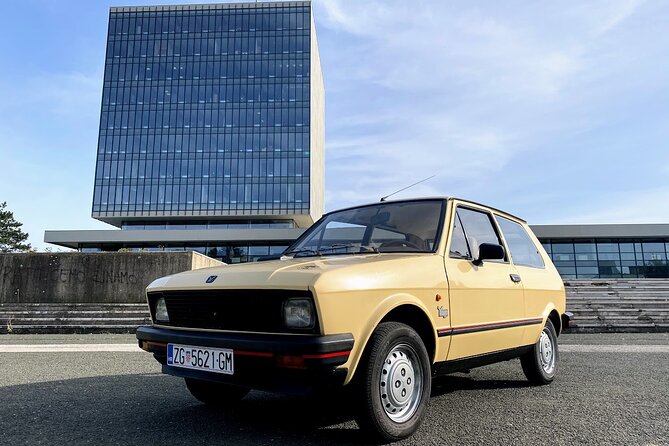
Zagreb’s past has four wheels. This private tour pairs a 35-year-old original Yugo with a local guide who explains how the city looked and felt during Yugoslavia. You visit apartment blocks, political buildings, river landmarks, and places tied to sport, music, and daily life.
I like the private format because you can focus on the subjects that interest you instead of following a fixed group script. I also like the mix of history and ordinary city scenes, from the huge Mammoth apartment block to the Sava River levee. The main drawback is the short running time: two and a half hours gives you a sharp introduction, not a full study of Zagreb’s communist past.
The tour costs $102.41 per person and includes private transportation, snacks, and a licensed local guide. With 100 percent of the 24 recorded ratings recommending it, the strongest praise centers on the personal feel of the outing. One especially useful detail is the guide name Theo, who helped make the tour meaningful for a person who had once lived in Yugoslavia and still remembered much of that era.
In This Review
- Key points at a glance
- Why Zagreb’s Yugoslav past works best from a Yugo
- Starting at Vatroslav Lisinski Concert Hall
- Gorica and the city’s everyday industrial past
- Travno and the Mammoth apartment building
- Zagreb Fair and the practical side of Yugoslavia
- Kockica, the concrete headquarters of power
- Walking the Sava River levee to Hendrix Bridge
- Music, Eurovision, and The Lady from Zagreb
- Dražen Petrović and the Cibona tower
- What the private format is worth at $102.41
- Who will enjoy this Zagreb tour most
- Cancellation and weather details to keep in mind
- Should you book the Back to Yugoslavia Yugo tour?
- FAQ
- Where does the tour begin?
- Where does the tour end?
- How long does the tour last?
- How much does the tour cost?
- Is this a private tour?
- Is transportation included?
- Is a guide included?
- What places does the tour visit?
- Are snacks included?
- Can I cancel for a full refund?
Key points at a glance
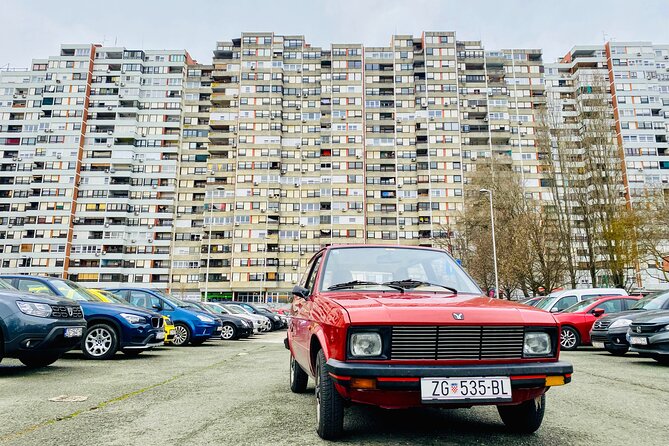
- Ride in a real old Yugo: The car is not a themed prop or modern replica. It is an original vehicle about 35 years old.
- See Zagreb beyond the historic center: The route reaches Travno, the Zagreb Fair, Kockica, the Sava River, and the Cibona area.
- Study Yugoslav-era architecture: The Mammoth apartment building and Kockica offer two very different views of the former state.
- A private, adjustable outing: Your own group takes part, so you can ask questions and shape the conversation.
- A strong local-history focus: The guide covers politics, architecture, sport, music, and everyday life.
- Simple central meeting point: The tour begins and normally ends at Vatroslav Lisinski Concert Hall.
Why Zagreb’s Yugoslav past works best from a Yugo
A standard walking tour can explain Zagreb’s medieval core and Austro-Hungarian streets. This outing takes you somewhere else. It uses a small classic car to connect parts of the city that do not fit neatly into a postcard route.
That matters because Yugoslav history is often easiest to understand through buildings and public spaces. A political headquarters tells one story. A giant apartment block tells another. A concert hall, sports tower, river bridge, and fairground add still more pieces.
The Yugo gives the tour a clear sense of place. It is part of the material culture being discussed, not simply transport between stops. You are looking at a period of history while riding in one of its familiar products.
The private format adds another advantage. If you already know something about Yugoslavia, you can ask for more detail instead of hearing a basic introduction. If the subject is new to you, the guide can slow down and explain the background in plain terms.
The tour is offered in English. The entire group is private, which makes it a good choice for couples, families, or friends who want a more direct conversation with the guide.
More City Tours in Zagreb
- Zagreb: Small Group Walking Tour City Center and WW2 Tunnels
★ 4.9 · 895 reviews - Zagreb: City and WWII Tunnels Walking Tour
★ 4.9 · 845 reviews - Hop On Hop Off Panoramic bus – Zagreb City Tour
★ 3.7 · 769 reviews
Starting at Vatroslav Lisinski Concert Hall
The meeting point is the Vatroslav Lisinski Concert Hall at Trg Stjepana Radića 4. It is also the normal return point, although you may finish at a location you choose if it is within the city limits, up to 3 kilometers around the main square.
The concert hall itself fits the theme. It is a major Zagreb venue, and the route includes a connection to the 1990 Eurovision Song Contest. That event took place shortly before Yugoslavia broke apart, so the venue carries more than a music connection. It also places the tour near an important moment in the region’s recent past.
The precise timing at every stop is not given, but the full outing lasts about two hours and 30 minutes. Several listed stops have short five or ten minute visits. You should expect a moving city tour with brief walks and explanations, not long museum visits or extended time inside buildings.
That format suits you if you want broad coverage. It is less suitable if you prefer to spend an hour examining one site in detail.
Gorica and the city’s everyday industrial past
The route includes an open-air market and an abandoned dishes factory known as Gorica. This is one of the more unusual parts of the outing because it turns attention away from official monuments.
An old factory can reveal how people lived and worked during the Yugoslav period. The open-air market adds a daily-life angle. Together, these places help move the discussion beyond political leaders and government offices.
The available details do not say whether you enter the former factory, so you should expect to see and discuss the site rather than assume an interior visit. That distinction matters if you are hoping for a guided industrial tour.
For me, this is the kind of stop that gives the trip its character. It may not be polished, but it can prompt a more grounded conversation about work, shopping, manufacturing, and the changes Zagreb has undergone.
Travno and the Mammoth apartment building

In Travno, the Yugo stops in front of The Mammoth, described as Zagreb’s largest apartment building. The visit lasts about five minutes and admission is free.
The name tells you what to expect: scale. Rather than focusing on decorative facades, this stop shows the huge residential planning that shaped parts of Yugoslav-era Zagreb. Apartment blocks were built to house large numbers of people, and their size gives you a practical sense of the period’s urban ambitions.
You will not spend long here, so pay attention to the guide’s explanation rather than expecting a formal architectural visit. The value comes from seeing the building in context and hearing how such housing fits into Zagreb’s growth.
This is also a useful contrast with central Zagreb. If your sightseeing has focused on historic streets and traditional buildings, Travno changes the visual rhythm. The Mammoth is a reminder that a city’s identity is also found in its residential districts.
A few more tours and experiences worth a look
- Old Zagreb Private Tour
★ 5.0 · 350 reviews - Zagreb Unveiled: Private walking tour with a local guide
★ 5.0 · 185 reviews - Zagreb Private Walking Tour with a local
★ 5.0 · 150 reviews - Private experience of Rastoke and Plitvice Lakes from Zagreb
★ 5.0 · 138 reviews
Zagreb Fair and the practical side of Yugoslavia
The route passes the Zagreb Fair, the city’s main venue for fairs and trade shows. No admission is listed, and this is presented as an exterior city stop rather than a scheduled event visit.
The fairground provides another look at public life. Large fairs and trade shows brought products, business, and visitors together. A stop here can help you picture the city as a working center, not just a political capital or tourist destination.
The tour’s value is strongest when these places are connected. The market and factory suggest production and everyday buying. The apartment building suggests housing. The fairground suggests trade and public display. You receive a broad social picture from ordinary urban sites.
Because the stop is brief, do not book this tour expecting access to current exhibitions or a long look around the fair complex. The point is the setting and the historical explanation.
Kockica, the concrete headquarters of power
Kockica means The Dice, a nickname for the striking building built to house the Central Committee of Croatian Communists. The tour pauses here for about five minutes, with no admission charge.
This is likely the clearest political stop on the route. The building gives the guide a place to explain how power was organized in socialist Croatia and how Croatian politics fit within Yugoslavia.
Its name also makes the site easy to remember. You do not need a long architectural lecture to understand why a building with a bold geometric form became known by a simple nickname.
The visit is short, so the experience depends heavily on the guide. A licensed local guide can provide the context that the exterior alone cannot. If you have questions about the former political system, this is a good place to ask them.
Kockica also helps balance the more personal stops. The Mammoth shows how people lived. Kockica shows where political decisions were made. Placed together, they give the route a useful structure.
Walking the Sava River levee to Hendrix Bridge
At the Sava River, you leave the car for a short walk along the levee. The listed walking time is about ten minutes, and the stop includes a view of the famous Hendrix Bridge.
This is the tour’s open-air pause. The river adds space after the dense apartment blocks and institutional buildings. You get a chance to stretch your legs, take photographs, and consider how Zagreb’s urban development relates to the Sava.
The bridge’s nickname gives the stop a local flavor. The tour is not only about official Yugoslav symbols. It also includes the informal names and shared references that make a city feel lived in.
Wear comfortable shoes, even though the walk is short. The tour is mainly vehicle-based, but it is not entirely seated. Weather also matters here. The company states that good weather is required, and poor conditions may lead to a new date or a full refund.
Music, Eurovision, and The Lady from Zagreb
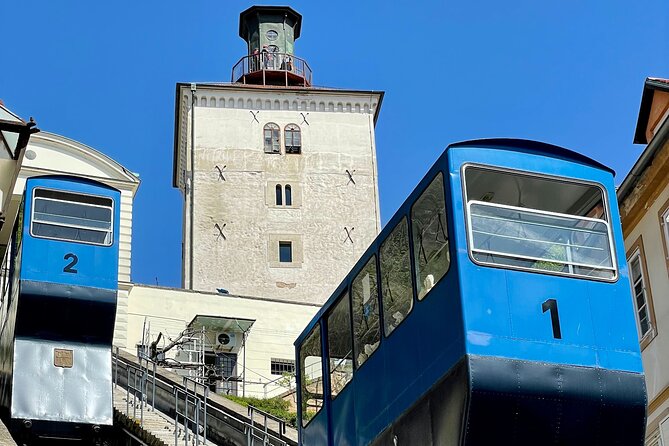
The route includes the concert hall associated with Eurovision in 1990 and passes by an attraction known as The Lady from Zagreb. The available details do not specify a long stop at either place, so consider them part of the moving commentary rather than full visits.
The Eurovision connection gives the tour a memorable cultural marker. It links entertainment with the political timeline of the late Yugoslav period. If you are interested in popular culture, ask the guide to explain the event’s place in Zagreb’s story.
The Lady from Zagreb is another example of how the tour mixes large public history with recognizable city references. Since the description does not provide further details about the attraction, you should not expect a dedicated lecture or admission visit. The guide will point it out as you pass.
These smaller moments are useful because they keep the route from becoming a procession of government buildings. They show how the city remembers itself through music, nicknames, public art, and shared stories.
Dražen Petrović and the Cibona tower
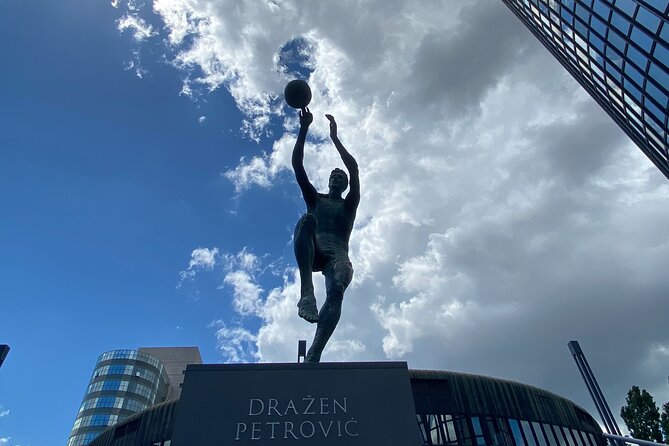
The final listed stop is the Dražen Petrović Museum and Memorial Center area. You see the statue of Dražen Petrović, one of Croatia’s best-known basketball players, along with the Cibona tower. The stop lasts about ten minutes and admission is free.
This section brings sport into the story. Dražen Petrović is tied to Zagreb, Croatia, and the wider Yugoslav sporting world, so the statue offers a human focus after the political and architectural sites.
The Cibona tower is another strong visual reference. Even if you are not a basketball fan, the combination of statue, museum, and tower helps you understand how sport can carry memory and identity.
The information provided does not say that museum entry is included. Plan on seeing the memorial area and hearing the guide’s explanation, rather than assuming you will tour the museum galleries.
This is a good final stop because it shifts the mood. The route begins with factories, housing, and political buildings, then closes with a figure remembered for achievement and public pride.
What the private format is worth at $102.41
At $102.41 per person, this is not the cheapest way to get around Zagreb. You are paying for a private car, a licensed guide, snacks, and a route focused on a specific period of history.
The price makes more sense if you are traveling as a small group and care about the subject. A private tour lets you ask questions, request more attention to architecture or everyday life, and avoid being folded into a large group. It also gives you a distinctive vehicle rather than ordinary city transport.
The value is less clear if you only want a general introduction to Zagreb. Several stops are short, admission is free, and the tour does not include a long museum visit. For a first-time visitor who wants the main historic center, another city tour may cover more familiar sights.
I would judge the price by your interest in the theme. If Yugoslav history, old cars, urban planning, or local memory matters to you, the combination is unusual enough to justify the cost. If you mainly want scenic sightseeing, you may not get full value from the specialized route.
Snacks are included, but the main benefit is the guide’s time and the private ride. The tour is booked an average of 58 days ahead, which suggests you should reserve early if your Zagreb dates are fixed.
Who will enjoy this Zagreb tour most
I would recommend this outing to:
- People interested in Yugoslavia, socialism, and Croatia’s recent past
- Visitors who prefer local neighborhoods to a standard old-town route
- Fans of classic cars and unusual forms of transportation
- Couples or small groups who value a private guide
- Anyone who wants to connect politics, housing, music, sport, and daily life
- People who have personal memories of Yugoslavia and want a more informed return
It may be less suitable for you if you need step-free detail, long indoor visits, or a tightly scheduled museum program. The available information says most people can participate and that service animals are allowed, but it does not provide full vehicle-access details.
The tour is near public transportation, and the central meeting point is easy to use as a reference. Confirm the exact meeting instructions after booking, since confirmation is sent within 48 hours and depends on availability.
Cancellation and weather details to keep in mind
You can cancel up to 24 hours before the start time for a full refund. Changes made less than 24 hours before the start are not accepted, and the local time cutoff applies.
Good weather is required. If poor weather cancels the outing, you are offered another date or a full refund. This matters because part of the tour includes walking along the Sava River levee and viewing sites from outside.
Should you book the Back to Yugoslavia Yugo tour?
Book it if you want Zagreb explained through its socialist-era buildings, public spaces, and personal memories rather than only through famous historic sights. The old Yugo, private format, and range of stops make this a focused and unusual way to see the city.
I would be especially interested if Theo is your guide, since his name is connected with a warm and informed tour for someone who had lived in Yugoslavia. Still, the experience depends on the guide’s ability to connect short stops into a clear story.
Skip it if you want extensive museum time, long walks, or a broad survey of all Zagreb attractions. For the right audience, though, $102.41 buys more than a car ride. It buys access to a side of Zagreb that is easy to miss from the central square.
FAQ
Where does the tour begin?
It begins at Vatroslav Lisinski Concert Hall, Trg Stjepana Radića 4, 10000 Zagreb, Croatia.
Where does the tour end?
It normally ends in front of Vatroslav Lisinski Concert Hall. You may choose another ending point within the city limits, up to 3 kilometers around the main square.
How long does the tour last?
The tour lasts approximately two hours and 30 minutes.
How much does the tour cost?
The listed price is $102.41 per person.
Is this a private tour?
Yes. Only your own group participates in the activity.
Is transportation included?
Yes. Private transportation and a ride in an original 35-year-old classic Yugo are included.
Is a guide included?
Yes. The tour includes an experienced licensed local guide and is offered in English.
What places does the tour visit?
The route includes Gorica, Travno and The Mammoth apartment building, Zagreb Fair, Kockica, the Sava River and Hendrix Bridge, the Eurovision-related concert hall, The Lady from Zagreb, and the Dražen Petrović Memorial Center area.
Are snacks included?
Yes. Snacks are included in the tour.
Can I cancel for a full refund?
Yes, if you cancel at least 24 hours before the experience starts. Poor weather may also result in a different date or a full refund.
Just added around Zagreb
- Zagreb: VR 3D Immersive Film Experience – Voucher★ 4.6 · 9 reviews
- Zagreb GRAND Private Walking Tour★ 4.5 · 9 reviews
- Zagreb: Explore with an Art Historian – Private Walking Tour★ 4.9 · 9 reviews
- From Zagreb: Plitvice Lakes & Rastoke Private Tour★ 5.0 · 9 reviews
- Croatian cuisine cooking class with Dolac market tour★ 5.0 · 9 reviews
- Private Guided Tour of Ljubljana and Lake Bled from Zagreb★ 5.0 · 9 reviews
- Picturesque Samobor & Samobor Castle Half-day Tour★ 4.5 · 9 reviews
- Zagreb to Split Private Transfer via Plitvice Lakes National Park★ 5.0 · 9 reviews
City Tours, compared.

City Walls Early Morning or Sunset Walking Tour
Read our review →
Dubrovnik Combo: Old Town & Ancient City Walls
Read our review →
Small Group Walking Tour City Center and WW2 Tunnels
Read our review →
Hop On Hop Off Panoramic bus – Zagreb City Tour
Read our review →
Browse the lists this tour appears in