
Reviewed · 2-HOUR EXPERIENCES
Walls of Dubrovnik: Small-Group 2-Hour Tour With a Local
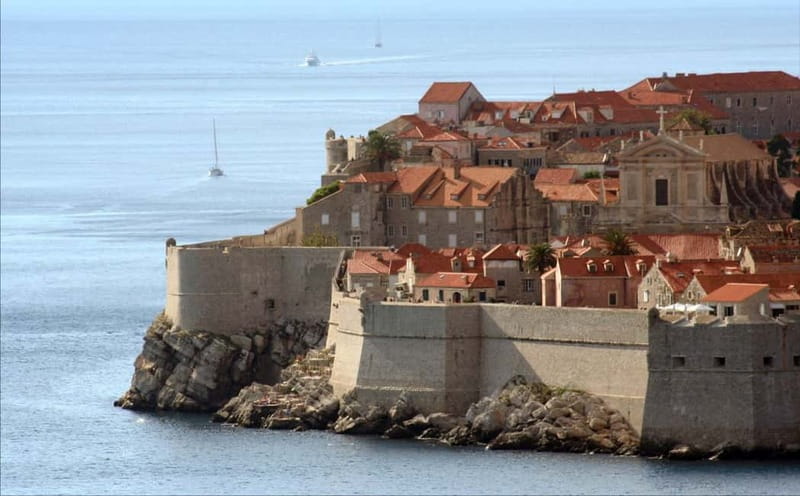
Dubrovnik looks best from above. This two-hour walk pairs sweeping views of the Old Town and Adriatic with a close look at the city’s defenses, from Fort Revelin to Minčeta Fortress and the southern walls. I like the small groups, limited to eight people per guide, and the local perspective offered by guides such as Marko, whose lively storytelling and quizzes keep the past moving. The catch is serious: you’ll face more than 700 stairs, and the €40 wall ticket is not included for most of the year.
I also like that this is not just a scenic stroll. You hear why the harbor needed protection, how Dubrovnik dealt with Venice and the Ottoman Empire, and how cannons, stone boulders, towers, and diplomacy helped a small republic survive. Check the total cost before booking, especially if you are not using the Dubrovnik Pass.
In This Review
- Key points to know before you go
- Why Dubrovnik’s walls are worth two hours
- Meeting by Fort Revelin and the Old Harbor
- The northern walls and medieval weapons
- Minčeta Fortress and the highest views
- The Stradun view and the western defenses
- The southern stretch, Venice, and Fort St John
- What Marko’s guiding style adds
- The true cost and value of the tour
- Who should book this wall walk?
- Practical tips for a better experience
- Should you book the Walls of Dubrovnik tour?
- FAQ
- How long does the Dubrovnik city-walls tour last?
- What is included in the tour price?
- How much is the city-wall entrance ticket?
- Can I use the Dubrovnik Pass?
- Where does the tour meet?
- Does the tour return to the starting point?
- Is the tour suitable for people with mobility difficulties?
Key points to know before you go
- More than 700 stairs: This is a demanding wall walk with no elevator or escalator, and it is not suited to visitors with mobility difficulties or a fear of heights.
- Small groups of up to eight: A compact group gives you a better chance to ask questions and hear the guide clearly.
- Marko is a local military-history guide: His engaging style, quizzes, and personal knowledge made a strong impression, including with a 10-year-old.
- The entrance ticket costs extra: The usual wall ticket is €40, but the Dubrovnik Pass includes entry and lets you skip the line.
- Minčeta Fortress is a major highlight: Expect strong views, stories about Michelozzi, the old gun foundry, and Dubrovnik’s cannon defenses.
- The tour completes the full circuit: You see the harbor, northern, western, and southern stretches before returning to the meeting point.
Why Dubrovnik’s walls are worth two hours
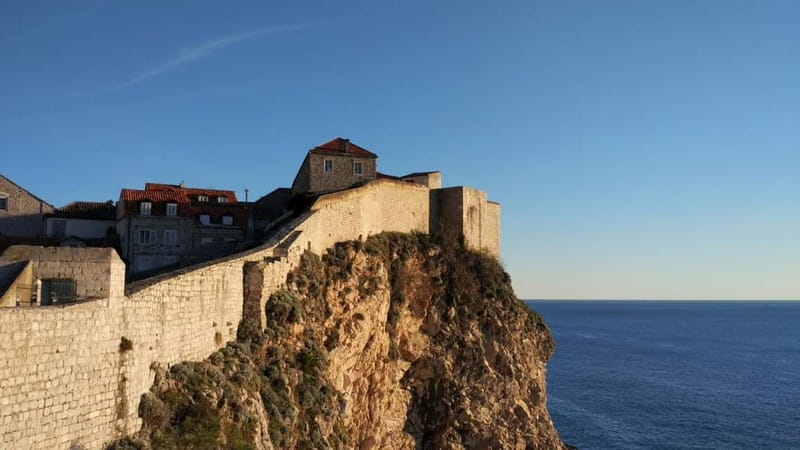
The city walls are Dubrovnik’s great viewing platform, but they are more than a pretty rim around the Old Town. They explain how this small maritime republic protected itself while larger powers pressed in from every direction.
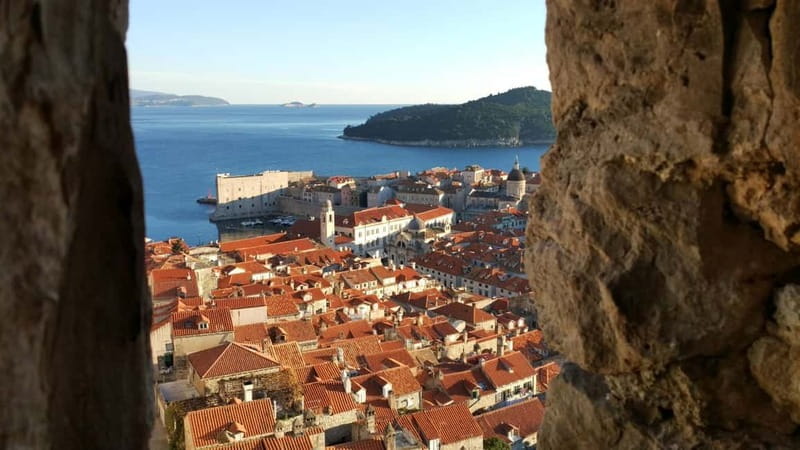
From the top, you can look down on red roofs, the narrow streets of the Old Town, the Old Port, and the Adriatic. The view is immediate and memorable. Yet the guide gives those sights a purpose. A harbor is no longer just a photogenic inlet. It becomes the working heart of a seafaring republic, tied to trade, ships, and the constant need to watch for attack.
I think that context makes the walk far more worthwhile than entering the walls alone and stopping at every postcard view. You learn to read the fortifications. Towers, thick stone sections, gun positions, and gate defenses begin to make sense as parts of one large defensive plan.
The English-speaking guide is licensed, and the group stays small. With a maximum of eight people per guide, this should feel more like a conversation than a large procession. You can ask about military tactics, local life, or what it is like to live inside the walls today.
A few more tours and experiences worth a look
- Dubrovnik: 3h Morning or 2h Afternoon Kayaking & Snorkeling
★ 5.0 · 162 reviews - Dubrovnik 2-Hour Uncertified Divers Introductory Dive
★ 4.7 · 118 reviews - Private Transfer from Dubrovnik to Split with 2 hours for sightseeing
★ 5.0 · 50 reviews
Meeting by Fort Revelin and the Old Harbor
The tour begins at the square in front of Fort Revelin, near the Ploče Gate. Look for the guide beside the cannon, holding a red and white flag. This detail matters because the area around the eastern entrance can be busy, and a clear meeting marker saves you from wandering around the square looking for a group.
The first view is toward the harbor. From the walls, your guide explains the Old Harbor’s role in Dubrovnik’s maritime activity, including its seafaring and trade. The harbor also shows why the eastern side of the city needed such careful protection. Ships, cargo, and access to the town all depended on keeping this approach secure.
Fort Revelin guarded the eastern entrance for centuries. Its position near the Ploče Gate made it a key part of the city’s defense, not a decorative extra. This is a good early stop because it connects the wall walk to the gates below. You see how Dubrovnik controlled movement into the Old Town and protected the route from the harbor.
The first steps also give you a useful warning about the physical demands ahead. The path includes many stair sections, and the tour covers more than 700 stairs overall. Wear shoes with a firm grip, and do not treat the two-hour length as a sign that this is an easy walk.
The northern walls and medieval weapons
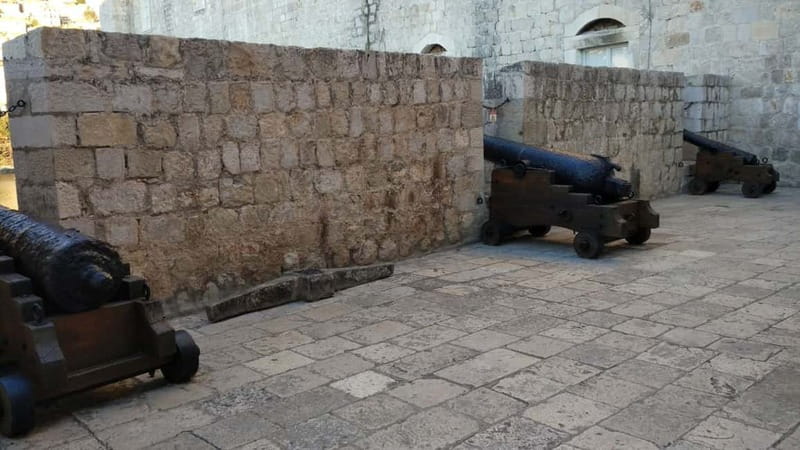
The northern stretch brings you into the practical world of medieval warfare. Here, the guide explains how defenders used bows and arrows, stone boulders, and siege methods against attackers.
This part is especially useful if you prefer history that connects to real objects and spaces. The height of the wall, the position of a tower, and the narrow approach to a gate all tell you something about how an attack might unfold. Instead of hearing a list of dates, you start thinking about sightlines, weapons, and the difficulty of reaching the city.
At one strategic tower, the subject turns to Dubrovnik’s relationship with the Ottoman Empire. The important lesson is that survival did not depend only on stone walls or armed force. Diplomacy played a major role too. Dubrovnik had to deal with powerful neighbors, and careful negotiation could sometimes accomplish what a battlefield could not.
I find this balance one of the strongest parts of the experience. The city’s survival is not presented as a simple story of heroic defense. You see a small republic using fortifications, trade, political judgment, and diplomacy together.
Minčeta Fortress and the highest views
Minčeta Fortress is one of the tour’s main stops. It is a powerful defensive structure and one of the best places to take in Dubrovnik from above.
Your guide discusses the contribution of the Italian architect Michelozzi, along with the old gun foundry and the large collection of cannons once used to protect the city. That detail gives the fortress a working identity. Minčeta was not simply a lookout point. It was built and adapted to meet changing military threats.
The views here are a major reward for the climb. You can take in the Old Town and the sea from a high position, and the morning light can be particularly pleasant according to the tour description. Still, the exposed height may bother anyone who dislikes steep drops or open wall edges. The tour is specifically not recommended for people afraid of heights.
This is also a natural place for photographs, but try to give yourself time to listen. The fortress story adds much more than another scenic stop. The old gun foundry and cannons show how Dubrovnik updated its defenses as warfare changed.
Something different for another day:
- Blue Cave Small-Group Boat Tour from Dubrovnik
★ 5.0 · 9,360 reviews - Full-Day Dubrovnik Elaphite Islands Cruise with Lunch and Drinks
★ 5.0 · 8,823 reviews - Dubrovnik: Epic Game of Thrones Tour + Lokrum & Saver Option
★ 4.9 · 5,995 reviews - Dubrovnik: Elaphiti Islands Full-Day Cruise with Lunch
★ 5.0 · 5,938 reviews
The Stradun view and the western defenses
Further along, you get a distinct view of the Stradun, the Old Town’s main street. Seen from the walls, this famous thoroughfare becomes part of a larger city plan rather than just a street lined with buildings.
The viewpoint is a good photo stop, but the real benefit is perspective. From ground level, Dubrovnik’s lanes can feel compressed and maze-like. From the walls, you can understand how the Old Town fits together and how the defensive ring surrounds it.
The western stretch turns attention to Fort Lovrijenac and Fort Bokar. These forts helped protect the Pile Gate, one of the city’s key entrances. Their position shows that Dubrovnik did not rely on the main wall alone. The city used separate forts and overlapping defensive positions to guard vulnerable approaches.
One striking detail concerns Lovrijenac: some sections of its walls reach twelve meters thick. That figure helps explain the scale of the defenses better than a general description of strength. The fortifications were designed to absorb attack, block access, and protect the city’s western side.
You should also expect more stairs and changing levels here. The wall walk is not a flat promenade. If you need frequent rests, the guide may be able to answer questions while you take a moment, but the tour still requires a moderate level of fitness.
The southern stretch, Venice, and Fort St John
The southern section brings the full circuit toward the sea and the Old Port. You learn about both the oldest and youngest parts of the medieval walls, which helps show that Dubrovnik’s defenses developed over time rather than appearing as one single project.
This is where the rivalry with Venice comes into focus. Both were maritime powers, and Dubrovnik had to protect its independence while dealing with a powerful neighbor whose interests could overlap or conflict with its own. The wall itself becomes evidence of that long contest for influence and security.
The route continues toward Fort St John and the Old Port. Fort St John protected the harbor and formed another link between the city’s maritime life and its military defenses. By this stage, the different parts of the tour begin to connect: the harbor needed protection, the gates needed control, and the walls needed towers and forts positioned around the city’s vulnerable sides.
The tour ends back at the original meeting point. That makes planning simple, especially if you want to continue exploring the Old Town afterward. The walk covers the whole city wall circuit rather than stopping after one especially scenic section.
What Marko’s guiding style adds
The guide can make or break a history walk, and Marko receives especially strong praise for his approach. He is a local of Dubrovnik, and his military focus gives the tour a clear theme rather than a loose collection of city facts.
His style is described as engaging, witty, and enthusiastic. He uses questions and quizzes during the walk, which keeps you involved instead of letting the tour become a long speech. That approach even held the attention of a 10-year-old for the full two hours, a useful sign for families with older children.
Marko also appears to bring personal knowledge of Dubrovnik and its surrounding areas. That local connection matters because the tour includes the experience of living inside the walls, not only the formal story of battles and buildings. You have room to ask what daily life is like in the historic center and how the old fortifications shape the city today.
There is no promise that every departure will be led by Marko, so book this for the format and subject rather than assuming a particular guide. Still, the guide quality is clearly one of the experience’s strongest selling points.
The true cost and value of the tour
The tour itself costs $36 per person. That is a reasonable price for two hours with a licensed English-speaking guide in a group capped at eight, but you must add the city-wall entrance fee.
For most of the year, the wall ticket is €40 and can be paid at the entrance by cash or card. In January, February, November, and December, the ticket costs €20. Students with a valid ISIC card and visitors under 18 pay €15.
The Dubrovnik Pass changes the calculation. It includes free entry to the walls and allows you to skip the line, so it may be the better choice if you also plan to visit other included sights. The tour provider strongly recommends using it if you have one.
That means the experience is best value for someone who wants historical explanation, not just admission. If you only want to walk the walls quickly and take photos, the added tour price may feel unnecessary. If you want to understand the forts, harbor, weapons, and political pressures, the guide helps turn the ticket into a much fuller visit.
You can reserve now and pay later, and cancellation is free up to 24 hours in advance for a full refund. Starting times vary, so check availability and consider choosing a cooler part of the day if one is offered.
Who should book this wall walk?
I would recommend this tour to you if you enjoy military history, city defenses, and views with a clear story behind them. It also suits first-time visitors who want to see the full circuit without guessing which towers or forts deserve attention.
Families with children aged 12 and over may enjoy the quizzes and storytelling, especially if the child can manage a long stair-heavy walk. The experience is not suitable for children under 12, babies under one, wheelchair users, or people with mobility impairments.
You should also think carefully about the height and exertion. There is no elevator or escalator, and the walk requires a moderate fitness level. People with a low level of fitness or a strong fear of heights should choose a gentler Old Town activity.
Practical tips for a better experience
Meet at the square by the cannon and look for the red and white flag. Arrive with enough time to identify the guide before the group enters the walls.
Bring water and wear comfortable shoes. The 700-plus stairs are the main physical challenge, and the stone surfaces and exposed sections call for steady footing.
Plan the entrance fee in advance. If you have the Dubrovnik Pass, have it ready. If not, expect to buy the separate ticket at the entrance.
Keep your camera available for the harbor, Minčeta Fortress, the Stradun view, Fort Lovrijenac, Fort Bokar, and the Old Port. At the same time, listen at each stop, because the military details are what make this more than a scenic circuit.
Should you book the Walls of Dubrovnik tour?
Book it if you want the city walls explained by a local guide and you are comfortable with more than 700 stairs. The small group, full circuit, strong military focus, and enthusiastic guiding style make this a useful two-hour introduction to Dubrovnik’s defenses.
Skip it if you mainly want a quick photo walk, have mobility limits, dislike heights, or do not want to pay the separate wall admission. For the right visitor, though, the tour connects views, forts, weapons, trade, and diplomacy in a way that makes Dubrovnik easier to understand long after you leave the walls.
FAQ
How long does the Dubrovnik city-walls tour last?
The tour lasts two hours. Starting times vary, so check availability when booking.
What is included in the tour price?
The price includes a professional, licensed English-speaking guide. The city-wall entrance ticket is not included.
How much is the city-wall entrance ticket?
The regular ticket costs €40 for most of the year. In January, February, November, and December, it costs €20. Students with a valid ISIC card and people under 18 pay €15.
Can I use the Dubrovnik Pass?
Yes. The Dubrovnik Pass includes free entry to the city walls and lets you skip the line.
Where does the tour meet?
Meet in the square in front of Fort Revelin near the Ploče Gate. Look for the guide by the cannon, holding a red and white flag.
Does the tour return to the starting point?
Yes. The activity ends back at the meeting point.
Is the tour suitable for people with mobility difficulties?
No. The walk includes more than 700 stairs, with no elevator or escalator. It is not suitable for wheelchair users, people with mobility impairments, people with a low level of fitness, or people afraid of heights.
Just added around Dubrovnik
- Dubrovnik Sunset Mountain Tour With Wine★ 5.0 · 9 reviews
- From Dubrovnik: Mali Ston Oyster Paradise Tour with Transfer★ 4.8 · 9 reviews
- Dubrovnik: Private Panoramic Half-Day Buggy Tour with Brunch★ 4.6 · 9 reviews
- Luxury Day tour to Mostar and Kravice waterfalls★ 5.0 · 9 reviews
- Montenegro from Dubrovnik Private Tour★ 5.0 · 9 reviews
- Sarajevo & Mostar Private Day Tour from Dubrovnik★ 4.5 · 9 reviews
- Blue Sea & Black Mountains – Montenegro★ 5.0 · 9 reviews
- Ston Oysters & Wine Tasting Tour from Dubrovnik★ 5.0 · 9 reviews
2-Hour Experiences, compared.

2-Hour Cetina River Boat Tour and Nature Park Visit
Read our review →
3h Morning or 2h Afternoon Kayaking & Snorkeling
Read our review →
Dubrovnik 2-Hour Uncertified Divers Introductory Dive
Read our review →
Private Transfer from Split to Dubrovnik with 2 hours for sightseeing
Read our review →
Private Transfer from Dubrovnik to Split with 2 hours for sightseeing
Read our review →

Browse the lists this tour appears in