Reviewed · DUBROVNIK TOURS
Small Group Tour; Balkans & Central Europe – Dubrovnik to Vienna
Europe changes by the hour. This 10-day small-group journey links Dubrovnik with Vienna through Bosnia and Herzegovina, Serbia, Hungary, and Slovakia, giving you a fast-moving look at the Balkans and Central Europe. I like the route’s variety, especially the contrast between Mostar’s Ottoman lanes and Budapest’s grand boulevards. I also like the small maximum of 10 people, which should make border crossings and group walks easier.
The main drawback is a serious one: the tour summary promises a two-day Komani Lake and Valbona Valley hiking adventure in northern Albania, but the day-by-day route provided here does not include Albania or those hikes. The itinerary instead goes from Dubrovnik to Mostar, Sarajevo, Belgrade, Budapest, Bratislava, and Vienna, so you should confirm the exact route before paying.
In This Review
- Key points at a glance
- A fast route from Dubrovnik to Vienna
- Day 1: Mostar, Stari Most, and Blagaj
- Day 2: Sarajevo’s layered past
- Day 3: Zvornik and Belgrade Fortress
- Day 4: Wine and Baroque streets in Sremski Karlovci
- Day 5: Novi Sad and Petrovaradin Fortress
- Day 6: Subotica and the crossing into Budapest
- Day 7: Budapest from Buda to Pest
- Day 8: Győr’s churches and cafés
- Day 9: Bratislava’s old gate and hilltop castle
- Day 10: Hotel drop-off in Vienna
- What $3,773.83 really covers
- Who will enjoy this trip most
- Booking advice before you commit
- Should you book this Dubrovnik to Vienna tour?
- FAQ
- How long is the tour?
- Where does the tour begin?
- Where does the tour end?
- Which countries does the city itinerary visit?
- What accommodation is included?
- Is lunch included?
- What is the maximum group size?
- Is hotel pickup included?
- Does the tour include entrance tickets?
- Is the tour suitable for people with limited fitness?
Key points at a glance
- A six-country route: You begin in Croatia and finish in Austria, passing through Bosnia and Herzegovina, Serbia, Hungary, and Slovakia.
- Mostar and Sarajevo bring the strongest cultural focus: You see Stari Most, Blagaj, Ottoman quarters, Austro-Hungarian streets, and places tied to the First World War and the Yugoslav War.
- A maximum of 10 people: This is far more intimate than a large coach tour and may allow the guide to adjust free time and sightseeing.
- Shared three-star rooms keep the price down: The listed rate of $3,773.83 is based on double, twin, triple, or quadruple occupancy.
- Breakfast is included, not full-board meals: You pay separately for lunch, dinner, drinks, snacks, and personal purchases.
- The Albania description needs checking: The strongest praise concerns Komani Lake and Valbona Valley, yet those places are absent from the supplied 10-day schedule.
A fast route from Dubrovnik to Vienna
This is not a slow, stay-put holiday. You change cities often, cross several international borders, and spend a good deal of time in a vehicle. The reward is range: in ten days, you move from the Adriatic world of Dubrovnik to Ottoman Bosnia, Serbian river cities, Hungarian urban grandeur, Slovak medieval streets, and Vienna at the finish.
Your morning begins at 7:00 in Dubrovnik, with pickup at your hotel. A local driver takes you to the border, where you meet the tour leader. That transfer arrangement matters because the first day is already long, and you do not want to waste time finding a bus station or arranging a border connection on your own.
The group size is capped at 10 people. I consider that one of the tour’s better features. Small groups can move more easily through old towns, and a guide can usually answer questions without shouting over 40 people. The downside is that a compact itinerary still feels compact, no matter how small the group is.
Other Dubrovnik trips people book alongside this one:
- Blue Cave Small-Group Boat Tour from Dubrovnik
★ 5.0 · 9,360 reviews - Full-Day Dubrovnik Elaphite Islands Cruise with Lunch and Drinks
★ 5.0 · 8,823 reviews - Dubrovnik: Epic Game of Thrones Tour + Lokrum & Saver Option
★ 4.9 · 5,995 reviews
Day 1: Mostar, Stari Most, and Blagaj
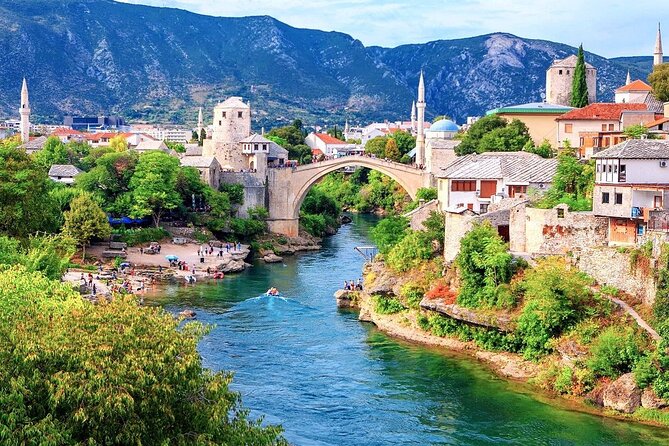
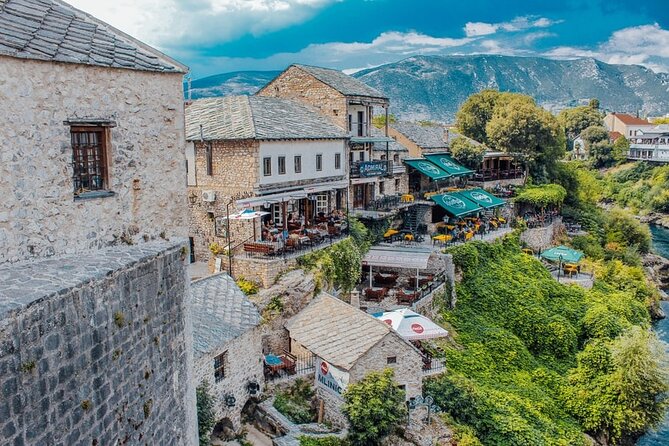
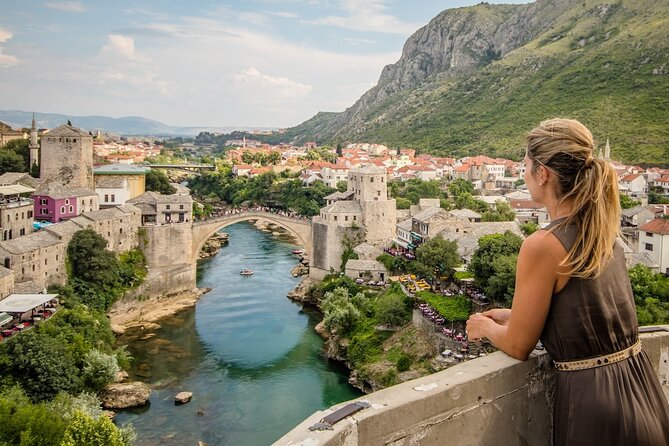
After leaving Dubrovnik, you cross into Bosnia and Herzegovina and head for Mostar. The star attraction is Stari Most, the famous stone bridge over the Neretva River and a UNESCO World Heritage site. You get about an hour around the bridge, enough to see its setting and take in the distinct Islamic architectural style of the 16th-century structure.
Mostar’s Old Bazaar gives you a better sense of the city than a bridge photograph alone. Cobblestone lanes, old mosques, small shops, and Turkish-style market streets show how much the city’s character comes from its Ottoman past. You will also see reminders of the city’s more painful modern story, including the repeated Don’t Forget message placed around town.
The schedule then takes you to Blagaj, a short distance outside Mostar. Here, the Blagaj tekija sits below a cliff beside the spring of the Buna River. The setting is striking because the clear water, rock face, and Ottoman-era religious building occupy such a small, concentrated space.
You return to Mostar for about an hour of free time. That is useful, but brief. Mostar rewards unhurried wandering, and you may find yourself wishing for more time to sit, browse, or eat. Still, the guide-led introduction helps you get oriented quickly.
Day 2: Sarajevo’s layered past
The drive to Sarajevo brings a change in mood. Sarajevo is presented through its Ottoman, Austro-Hungarian, religious, and wartime chapters. You walk across uneven ground and pass ruins, bullet holes, and cannon marks, so comfortable shoes are not optional.
The city’s nickname, the European Jerusalem, makes sense within the route’s focus. Mosques, churches, synagogues, markets, and older commercial streets sit close together. The value here is not simply checking off buildings. Your guide helps connect the city’s different quarters and explains how Sarajevo developed from the medieval Bosnian Kingdom through Ottoman and Austro-Hungarian rule.
The Latin Bridge is an essential stop. You learn how the assassination associated with this area helped trigger the First World War. The bridge itself is modest, which makes the event feel more immediate rather than theatrical.
Free time gives you a chance to try local food, including traditional meat dishes and desserts. Lunch is not included, so this is one of the days when you should budget for a proper meal. Sarajevo is a good place to do that, since food is part of the city experience rather than a minor break between sights.
Day 3: Zvornik and Belgrade Fortress
The next destination is Belgrade, with a stop in Zvornik along the Drina River. You have about an hour there for lunch or a short walk. Zvornik provides a quieter pause after Sarajevo and before the larger Serbian capital, though the schedule does not allow a long exploration.
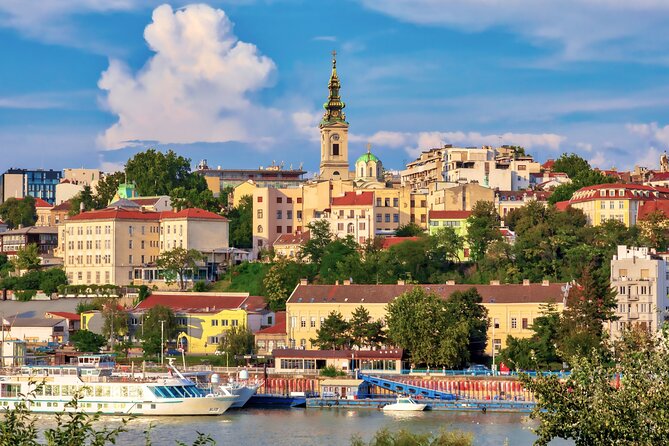
Belgrade receives more time. The visit centers on Belgrade Fortress and Kalemegdan Park, positioned where the Sava and Danube meet. The viewpoint is the main prize. From the fortress, you can see the rivers shaping the city and understand why this location mattered for defense and trade.
The Pobednik monument in the Upper Town dates from 1913. After the fortress, you walk along Knez Mihailova, Belgrade’s main pedestrian meeting place, toward Republic Square. The route gives you a useful first look at the capital, but two hours is enough for an introduction, not a full city visit.
You should expect a lot of walking on this tour. The streets and historic areas are generally the point of the journey, but they also mean uneven paving, hills, and long days on your feet.
Something different for another day:
- Dubrovnik: Elaphiti Islands Full-Day Cruise with Lunch
★ 5.0 · 5,938 reviews - Dubrovnik: Old Town Walking Tour
★ 4.8 · 5,174 reviews - Dubrovnik: The Original Game of Thrones Tour & Lokrum Option
★ 4.8 · 5,064 reviews - Dubrovnik Game of Thrones Tour & Optional Lokrum Island Visit
★ 5.0 · 4,702 reviews
Day 4: Wine and Baroque streets in Sremski Karlovci
Sremski Karlovci offers a gentler day. This small town is known for Serbian culture, 18th-century religious life, Baroque buildings, and wine cellars. The center feels compact and decorative, with a sense that its streets and buildings carry more stories than their size suggests.
You have around three hours here, including time to learn about local wine production and taste regional specialties if you choose. Wine tasting is not clearly listed as an included expense, so set aside money for it.
The Four Lions fountain comes with a local legend: drink from it and you will return to Karlovci, perhaps to marry there. I like details like this because they give a small town a human touch. You are not just looking at façades. You are hearing the sort of local story that makes a short stop memorable.
Day 5: Novi Sad and Petrovaradin Fortress
Novi Sad is described as northern Serbia’s cultural capital, and the city’s location helps explain its character. It developed near the old boundary between the Ottoman and Austro-Hungarian worlds, leaving a mix of architectural and cultural influences.
The pedestrian streets of Zmaj Jovina and Dunavska are the center of the walking visit. You also see Petrovaradin Fortress, often called the Gibraltar on the Danube. It is one of the major visual anchors of the route, and its elevated position gives the city a broader setting.
You get about three hours, followed by free time and an overnight stay in Novi Sad. That overnight matters. It breaks up the long sequence of one-night stops and lets you experience the city without immediately rushing back into the vehicle.
Day 6: Subotica and the crossing into Budapest
Subotica is one of the more distinctive stops because its appeal is architectural. The City Hall dominates the main square rather than a cathedral, and the surrounding park, fountains, and public spaces create a relaxed center.
The visit includes the Cathedral of St. Teresa of Avila and the synagogue. You also have time to walk independently, stop for coffee, and sample local food or wine. The three-hour visit gives you room to look up at the decorative façades instead of simply passing them from a bus window.
Later, you cross into Hungary and continue to Budapest. The border crossing is listed as a short stop, but international travel can take longer if conditions change. The operator notes that weather, strikes, holidays, closures, or other outside events may alter the timetable, so do not schedule an important independent appointment immediately after arrival.
Day 7: Budapest from Buda to Pest
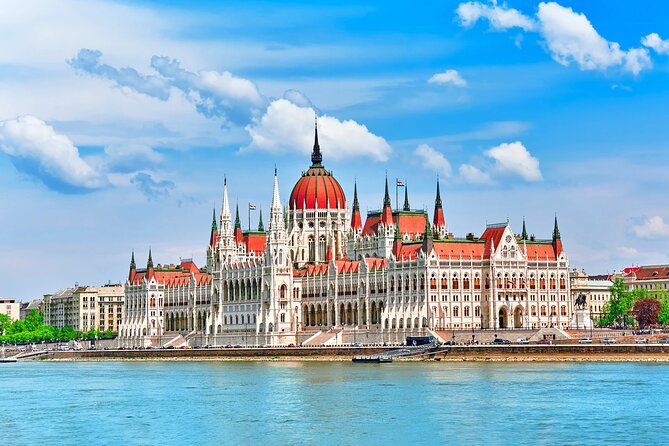
Budapest gets a fuller introduction than most of the other cities. You pass Saint Stephen’s Basilica, the Opera, Parliament, Heroes’ Square, and Fisherman’s Bastion. The city’s great strength is its architecture, which ranges from Baroque and Neoclassical buildings to Art Nouveau details.
The Danube divides traditional Buda from cosmopolitan Pest, and the route helps you see both sides. Buda Castle is included, with an entry ticket, and provides a useful historical anchor for the capital. Fisherman’s Bastion adds the classic high viewpoint over the river and city.
The formal sightseeing occupies about three hours, followed by free evening time. This is welcome because Budapest is especially enjoyable after dark, when the bridges and riverside buildings take on a different character. The itinerary does not include evening activities, so you can choose your own pace.
Day 8: Győr’s churches and cafés
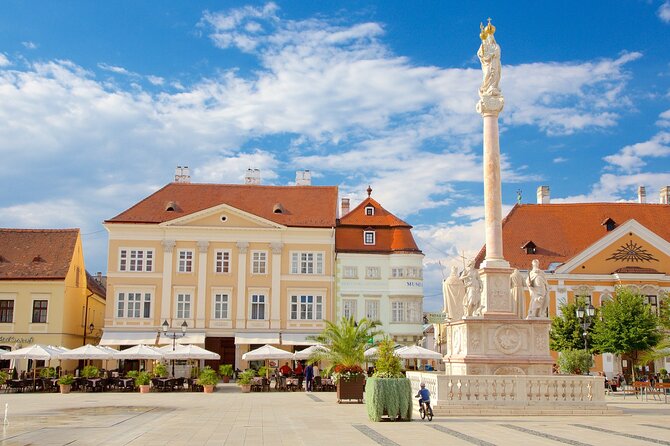
Győr is a smaller city and a sensible stop between Budapest and Bratislava. Its center is known for Baroque buildings, churches, and colorful homes, while the Town Hall is marked by a 59-meter tower with a green roof.
You walk along Baross Gábor Way, a pedestrian street lined with cafés, shops, bars, and restaurants. The Cathedral of the Virgin Mary and the Győr Synagogue are also included in the walk. The synagogue’s large gray dome is particularly easy to spot, and its design influenced other synagogues in Central Europe.
You have free time to eat and try Hungarian specialties. The itinerary even suggests blueberry beer, an unusual local tasting detail. Food and drinks are at your own expense, so use these independent pauses to control your daily budget.
Later, you continue to Bratislava. Again, this is a day with both sightseeing and transport, so you should not expect a leisurely afternoon.
Day 9: Bratislava’s old gate and hilltop castle
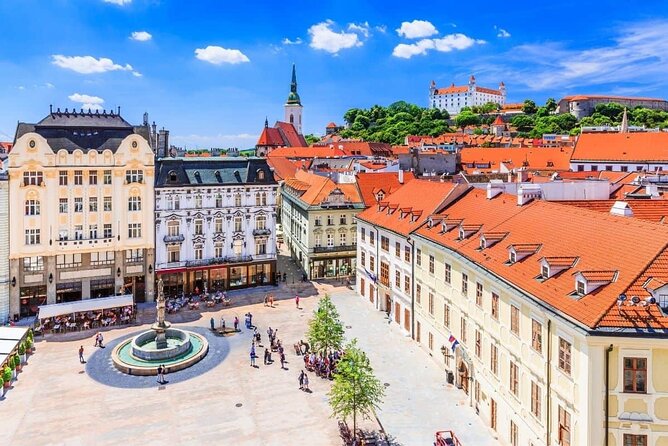
Bratislava is compact enough to explore on foot, and the route focuses on its medieval center. You visit the Old Town Hall and learn about the city’s early development before heading to Michael’s Gate, the only surviving gate from the medieval fortifications.
Bratislava Castle requires an uphill walk, but the view over the Danube and city makes the effort worthwhile. Entry to the castle is included. The schedule allows about an hour there before returning toward the center.
The final free hour is set aside for Bratislava’s café culture. Coffee is a fitting last taste of the city before Vienna, although you should keep your expectations practical: this is a short city visit, not a full cultural program.
Day 10: Hotel drop-off in Vienna
The final day is simple. Your tour leader drops you at your hotel in Vienna, Austria. No sightseeing is listed for Vienna, so arrange extra nights if you want time in the Austrian capital.
That ending is convenient for anyone building a longer Central European trip. You finish with a hotel drop-off rather than being left at a terminal, but you should confirm the exact drop-off details and timing with the operator.
What $3,773.83 really covers
The listed price is $3,773.83 per person. It covers accommodation and breakfast in three-star hotels, a professional tour leader, Dubrovnik hotel pickup, Vienna hotel drop-off, listed entry tickets, tourist taxes, road charges, petrol, and international car insurance.
The price is calculated on shared double, twin, triple, or quadruple occupancy. If you are traveling alone, ask about the single-room supplement before booking. The supplied information does not state that one-person rooms are included.
At first glance, the cost is high for three-star lodging. But the package also covers ten days of cross-border transport, fuel, road fees, a tour leader, and several admissions. I see the value mainly in convenience and route planning, not luxury.
You still need money for nine lunches, nine dinners, drinks, snacks, souvenirs, wine tastings, and personal spending. Since the route crosses several countries, daily food costs can vary. The included breakfast helps, but this is not a full-board tour.
Who will enjoy this trip most
I would choose this route if you want a broad first look at the western Balkans and nearby Central Europe without arranging several buses, hotels, and border crossings yourself. It suits independent-minded people who still appreciate having transport and a guide handled for them.
It is also a good fit if you enjoy city walking, old bridges, fortresses, religious buildings, riverside views, and food stops. You should have moderate physical fitness, since Sarajevo includes uneven terrain and several visits involve walking, hills, or extended time outdoors.
I would not choose it if you want long stays in each city, luxury hotels, or a dedicated hiking holiday. The Albania hiking description is especially important to clarify. The itinerary supplied here contains no Komani Lake boat ride or Valbona Valley trek, even though the description and several guide comments focus heavily on those experiences.
The named guides associated with the strongest praise include Bilbil, Mira, Sokol, Armando, and Ani. The consistent theme is personal care: practical suggestions during free time, help reaching sites, friendly service, and strong local explanation. That is encouraging, though your actual guide will depend on departure arrangements.
Booking advice before you commit
Confirm the route in writing. Ask whether your departure includes the Dubrovnik to Vienna city itinerary or the separate Komani Lake and Valbona Valley program. These are very different trips, with different countries, transport, fitness demands, and likely packing needs.
Also confirm the hotel-sharing arrangement, what entry tickets are covered, and whether breakfast is available at every overnight. The booking is non-refundable and cannot be changed for any reason, so this is not a tour to reserve casually while your plans are still uncertain.
Tips are not required in the Balkans, but the operator recommends tipping the tour leader and driver for good service. Keep that as a voluntary extra rather than a fixed part of your budget.
Should you book this Dubrovnik to Vienna tour?
Book it if you value route coverage, small-group transport, and local guiding more than slow travel. In ten days, you see an impressive range of cities and border regions, and the strongest days are likely Mostar, Sarajevo, Belgrade Fortress, Sremski Karlovci, Budapest, and Bratislava.
Hold off if the Albanian Alps are the reason you are interested. The missing Albania days are too important to overlook. Get the exact itinerary confirmed first, then decide if the price makes sense for your room arrangement and expected spending on meals.
FAQ
How long is the tour?
The tour lasts approximately 10 days.
Where does the tour begin?
It begins in Dubrovnik, Croatia, with hotel pickup at 7:00 am.
Where does the tour end?
It ends with hotel drop-off in Vienna, Austria.
Which countries does the city itinerary visit?
The route begins in Croatia, continues through Bosnia and Herzegovina, Serbia, Hungary, and Slovakia, and finishes in Austria.
What accommodation is included?
Accommodation is included in three-star hotels with breakfast. Prices are based on double, twin, triple, or quadruple room occupancy.
Is lunch included?
No. Lunch, dinner, drinks, snacks, souvenirs, and personal spending are not included.
What is the maximum group size?
The tour has a maximum of 10 travelers.
Is hotel pickup included?
Hotel pickup is included in Dubrovnik, and hotel drop-off is included in Vienna.
Does the tour include entrance tickets?
Entry tickets for the listed sites are included. The itinerary specifically identifies admission at Blagaj tekija, Buda Castle, and Bratislava Castle.
Is the tour suitable for people with limited fitness?
The tour requires a moderate physical fitness level. Sarajevo includes uneven terrain, and several sightseeing days involve substantial walking.
Just added around Dubrovnik
- Dubrovnik Sunset Mountain Tour With Wine★ 5.0 · 9 reviews
- From Dubrovnik: Mali Ston Oyster Paradise Tour with Transfer★ 4.8 · 9 reviews
- Dubrovnik: Private Panoramic Half-Day Buggy Tour with Brunch★ 4.6 · 9 reviews
- Luxury Day tour to Mostar and Kravice waterfalls★ 5.0 · 9 reviews
- Montenegro from Dubrovnik Private Tour★ 5.0 · 9 reviews
- Sarajevo & Mostar Private Day Tour from Dubrovnik★ 4.5 · 9 reviews
- Blue Sea & Black Mountains – Montenegro★ 5.0 · 9 reviews
- Ston Oysters & Wine Tasting Tour from Dubrovnik★ 5.0 · 9 reviews
Dubrovnik Tours, compared.
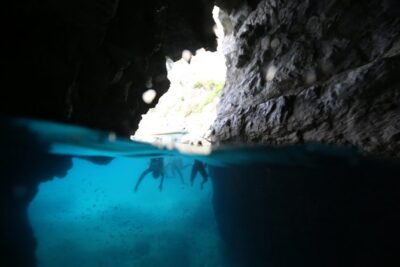
Blue Cave Small-Group Boat Tour from Dubrovnik
Read our review →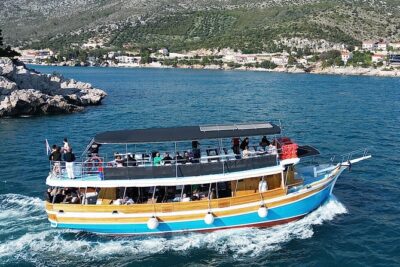
Full-Day Dubrovnik Elaphite Islands Cruise with Lunch and Drinks
Read our review →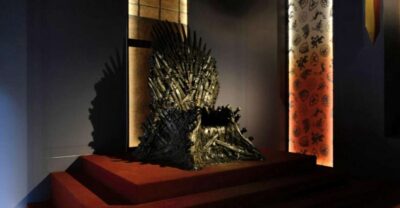
Epic Game of Thrones Tour + Lokrum & Saver Option
Read our review →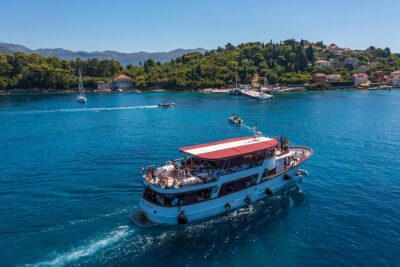

The Original Game of Thrones Tour & Lokrum Option
Read our review →
Dubrovnik Game of Thrones Tour & Optional Lokrum Island Visit
Read our review →