Reviewed · PRIVATE
Pearls of the Balkans from / to Dubrovnik; Semi – Private Tour
Eight days, six countries, one busy ride. This semi-private Balkan tour links Dubrovnik with Kotor, Budva, Tirana, Berat, Ohrid, Skopje, Prizren, Shkoder, Mostar, and more. I like the way it reaches places that are awkward to connect on your own, and I like the small maximum group size of 10, which gives the trip a more personal feel than a large coach tour.
The strongest parts are the local guiding and the mix of famous sights with more unusual stops, such as an Albanian slow-food farm and Ohrid’s handmade paper workshop. The main caution is pace: you cover a lot of ground, cross several borders, and spend plenty of time in the vehicle. Hotel quality can also vary, and the included rooms are based on shared three-star accommodation.
In This Review
- Key points at a glance
- What this eight-day Balkan route really offers
- Day 1: Kotor’s lanes and Budva’s old walls
- Day 2: Tirana’s communist past and modern center
- Day 3: Berat’s hillside houses and Ohrid’s lake view
- Day 4: Skopje and the old bazaar, then Prizren
- Day 5: Albanian food traditions in Shkoder
- Day 6: Lake Skadar and a quiet hour in Virpazar
- Day 7: Blagaj and Mostar’s Ottoman architecture
- Hotels, meals, transport, and the real price
- Who should book this Balkan tour?
- Should you book Pearls of the Balkans?
- FAQ
- Where does the Pearls of the Balkans tour start and finish?
- What time does the tour begin?
- How many people can join the tour?
- Is transportation included?
- Are meals included?
- What type of accommodation is provided?
- Is the tour refundable if I cancel?
Key points at a glance
- Nine destinations across six Balkan countries: Croatia, Montenegro, Albania, North Macedonia, Kosovo, and Bosnia & Herzegovina all appear in one route.
- Small-group format: The tour has a maximum of 10 people, with private transportation and a professional tour leader.
- Excellent local guides: Guides such as Migen A. and Gesi have been praised for flexibility, regional knowledge, and strong food recommendations.
- Food and craft stops add character: Mrizi i Zanave and the Venetian mask factory offer more than standard sightseeing.
- Expect long travel days: The route is ambitious, with border crossings and frequent changes of hotel.
- Price includes the big transport costs: At $3,434.13 per person, accommodation, breakfasts, entry tickets, fuel, road taxes, insurance, and private transport are covered, but meals beyond breakfast are not.
What this eight-day Balkan route really offers
This is not a slow holiday based in one or two towns. It is a moving tour designed for you to see the broad shape of the western Balkans in a short time.
You begin in Dubrovnik and quickly move into Montenegro. From there, the route heads through Albania, North Macedonia, Kosovo, back into Albania and Montenegro, then Bosnia & Herzegovina before returning to Croatia. That broad loop is the tour’s main selling point. You can visit Kotor, Ohrid, Prizren, and Mostar without arranging several separate transfers.
The tradeoff is clear. You will see many places, but some visits are short. Several stops give you about 30 minutes to one hour, enough for an introduction but not enough for a leisurely museum visit or a long café break. I would choose this trip if your priority is variety and regional context, not unpacking once and taking things slowly.
The tour is in English and includes private transportation. With no more than 10 people, you should have an easier time hearing the guide, asking questions, and adjusting the day when conditions require it. That flexibility mattered when one vehicle problem forced a change of car and guide. The operator arranged another vehicle and a temporary guide so the route could continue, which is useful reassurance on a complicated cross-border trip.
A few more tours and experiences worth a look
- Mostar and Kravice Waterfalls Tour from Dubrovnik (Semi-Private)
★ 5.0 · 3,125 reviews - Dubrovnik: Blue & Green Caves Private Boat Tour with Drinks
★ 4.7 · 814 reviews - Dubrovnik Private Speedboat Tour to Elaphite Islands with Drinks
★ 5.0 · 660 reviews
Day 1: Kotor’s lanes and Budva’s old walls
Your first morning begins early. The stated start time is 7:30 a.m., with hotel pickup in Dubrovnik arranged through a local driver before you meet the tour leader at the border. The pickup notes also describe Dubrovnik pickup at 9:00 a.m. on request, so confirm the exact time before departure. If you begin in Kotor, pickup can be arranged there at 11:00 a.m. at no extra charge, provided it is requested at least 12 hours ahead.
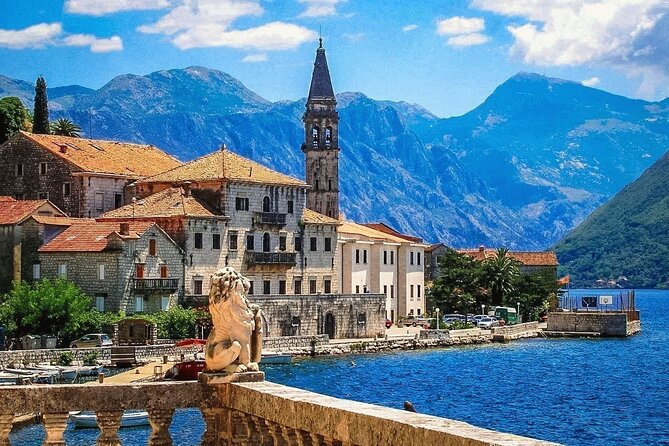
Kotor is a fine opening stop. Its old town is compact but full of turns, small squares, churches, and stone buildings. The irregular street plan was designed to confuse attackers, and it still works on modern visitors who have not yet learned the local rhythm.
The visit includes Saint Luke’s Church, a meaningful place for local residents because it represents unity. You receive about two hours in Kotor, which should allow a useful walk through the old town without trying to climb every slope above it.
Later, you continue to Budva, where the old and new parts feel quite different. New Budva has modern buildings, shopping, restaurants, and bars. Old Budva gives you medieval lanes, historic churches, and stone walls near the coast.
The two-hour visit is enough to see the main center, but you should not expect a full beach day or a detailed exploration of every church. This first day is already doing a lot: a border crossing, two old towns, and a transfer into the next stage of the route.
Day 2: Tirana’s communist past and modern center
After breakfast, the route continues to Tirana. The day combines recent political history with central city sights, giving you a better sense of Albania than a quick photo stop would.
Postblloku, also called Checkpoint, is an important early stop. The memorial recalls political prisoners who suffered under Albania’s communist regime. Its location opposite the government building adds weight to the visit, since the site sits in the middle of the city rather than being tucked away.
You then walk through Blloku, once restricted to members of the communist leadership and now filled with cafés, shops, and street art. Passing the former residence of Enver Hoxha helps connect the neighborhood’s polished present with its controlled past.
Skanderbeg Square brings together several parts of Tirana’s identity. You pass the National Museum, the Bank of Albania, the Opera, the Skanderbeg statue, and Ethem Beu Mosque. The walk continues to Tirana Castle, now a pedestrian area where old forms and newer businesses share the same space.
The religious section is especially useful. Albania was declared the world’s first atheist state in 1967, when religious activity was banned and religious buildings were closed or repurposed. Passing the Namazgah Mosque, the Orthodox Cathedral, and Catholic St. Paul’s Cathedral gives you a compact lesson in the country’s religious mix and its recovery after communism.
A three-hour city experience plus a one-hour walk makes Tirana one of the fuller urban visits on the trip. The pace is still organized rather than free-form, so if you have a particular museum in mind, ask the tour leader how much personal time is possible.
Day 3: Berat’s hillside houses and Ohrid’s lake view
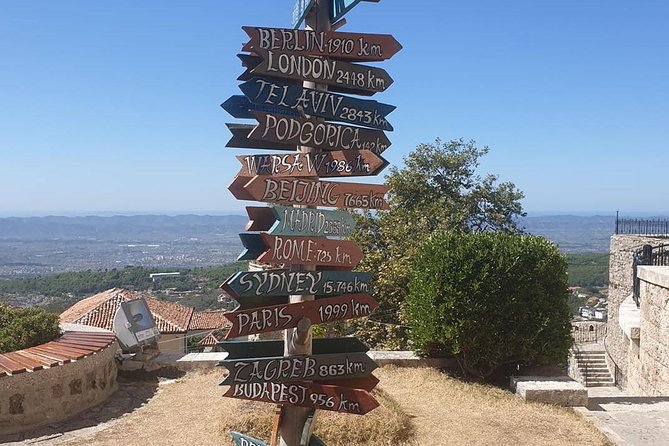
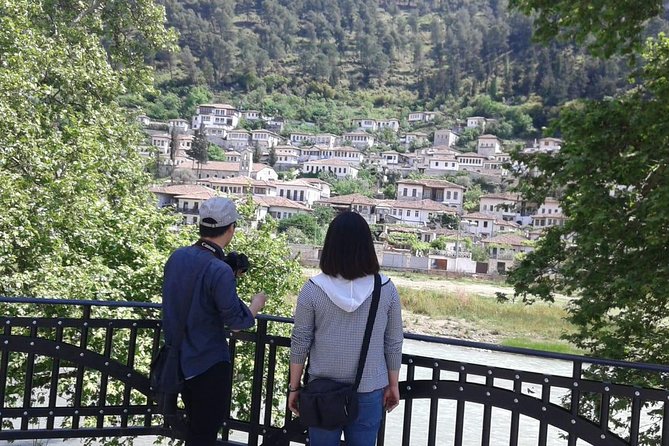
Berat is known for its many hillside windows, with old houses stacked above one another. The effect is striking, but the town is more than a pretty view. It began as an Illyrian settlement and later became a fortified city called Antipatrea.
The visit includes Berat Castle, where residents still live within the castle walls. That detail changes the way you see the site. It is not simply a preserved monument, but a living part of the town.
The listed sightseeing time in Berat is short, with about 30 minutes in the town and 30 minutes at the castle. You will get an introduction to the stone lanes, old houses, churches, mosques, and steep lower town, but this is one of the places where the schedule may leave you wanting more.
The drive then continues to Ohrid in North Macedonia. Ohrid and Lake Ohrid have UNESCO recognition, and the lake has long shaped the city’s identity. The Romans called it Lyhnidas, or the Light Lake, and the city later became an important Orthodox center.
The viewpoint at Saint John at Kaneo is the signature sight. From there, you can appreciate the church, the water, and the hilly old town together. Ohrid is also associated with 365 Orthodox churches, one for each day of the year, though the tour gives you only a short introduction to that religious heritage.
The old houses and narrow lanes reflect both the terrain and Ottoman-era building traditions. The uphill streets, tunnels, and small yards were arranged so homes could retain views toward the lake. You will have about an hour at the main Ohrid sights.
The National Workshop for Handmade Paper adds a welcome change of pace. You learn how paper is made by hand using methods associated with the period of Gutenberg, and you can buy a handmade sheet as a keepsake. This is a small stop, but it gives the day a local craft element rather than making it only churches and viewpoints.
Something different for another day:
- Blue Cave Small-Group Boat Tour from Dubrovnik
★ 5.0 · 9,360 reviews - Full-Day Dubrovnik Elaphite Islands Cruise with Lunch and Drinks
★ 5.0 · 8,823 reviews - Dubrovnik: Epic Game of Thrones Tour + Lokrum & Saver Option
★ 4.9 · 5,995 reviews - Dubrovnik: Elaphiti Islands Full-Day Cruise with Lunch
★ 5.0 · 5,938 reviews
Day 4: Skopje and the old bazaar, then Prizren
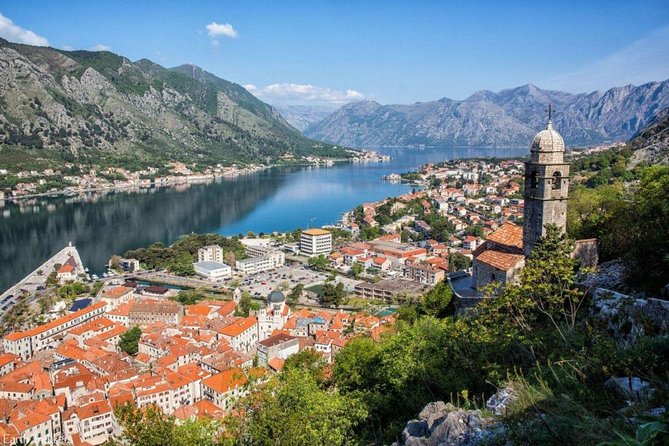
Skopje is a city of contrasts. European, Ottoman, and Asian influences appear in the center, sometimes in ways that feel carefully arranged and sometimes in ways that feel genuinely layered.
The Stone Bridge links the newer part of the city with the Old Bazaar. You also pass the Alexander the Great statue, the Art Bridge, and the Archaeological Museum. The Art Bridge is decorated with lanterns and statues of Macedonian artists and musicians, making it one of the more theatrical urban sights on the route.
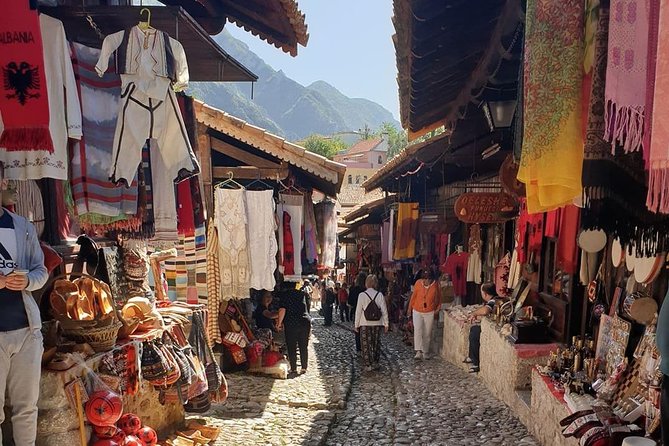
The Old Bazaar is the real reason to value the Skopje stop. It brings together shops, lanes, and centuries of city life in a setting that feels different from the monumental center. You have about an hour, including the Stone Bridge and bazaar, so keep your walk focused.
Later, you reach Prizren in Kosovo, often described as the country’s cultural capital. Its river runs through the old town, passing under several bridges. Ottoman and Byzantine influences appear in the architecture, while the surrounding hills give the city a clear sense of place.
The Sinan Pasha Mosque is the main interior visit. Its decorative patterns and color make it worth seeing, but dress and behavior should be respectful because it remains a religious site.
A climb to Kalaja Fortress gives you a broad view over Prizren. The listed time is one hour, which should allow the uphill visit and the panorama if the group keeps moving. Prizren receives about two hours in the old town, making it one of the better-balanced stops for a walk, a meal, or a short pause.
Day 5: Albanian food traditions in Shkoder
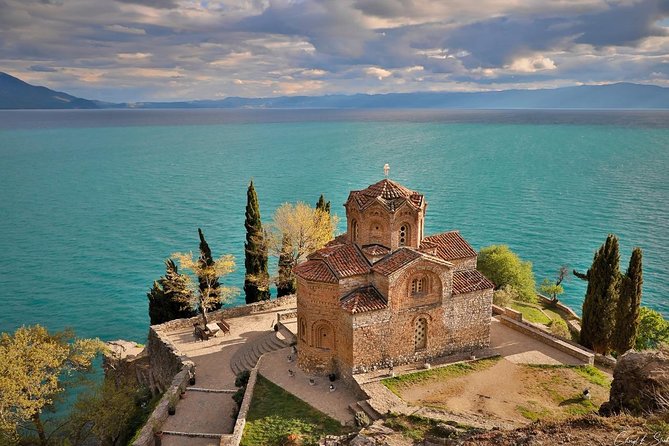
Mrizi i Zanave is one of the most distinctive stops on the route. This slow-food farm collects, prepares, and preserves regional organic products. You tour the farm, hear how it created jobs for more than 400 people in nearby communities, and see how old communist buildings were adapted for storage.
The stop is about an hour, with time for a traditional lunch or to buy farm products. Lunch is not included, but this is a worthwhile place to budget for a meal. It offers a direct connection to local agriculture and family enterprise that a standard city tour cannot provide.
In the afternoon, you continue to Shkoder, one of Albania’s oldest cities. The city gives its name to the large lake shared by Albania and Montenegro, and its castle has foundations dating back to the first millennium BCE.
You also visit a Venetian mask factory. The workshop makes papier-mâché masks by hand, with each piece painted and decorated individually. This is another good small-scale stop, especially if you enjoy traditional crafts and want a souvenir with a clear connection to the place you visited.
The time in Shkoder is listed as one hour, followed by 30 minutes at the factory. This will not cover every corner of the city, but it breaks up the road journey with food, history, and creative work.
Day 6: Lake Skadar and a quiet hour in Virpazar
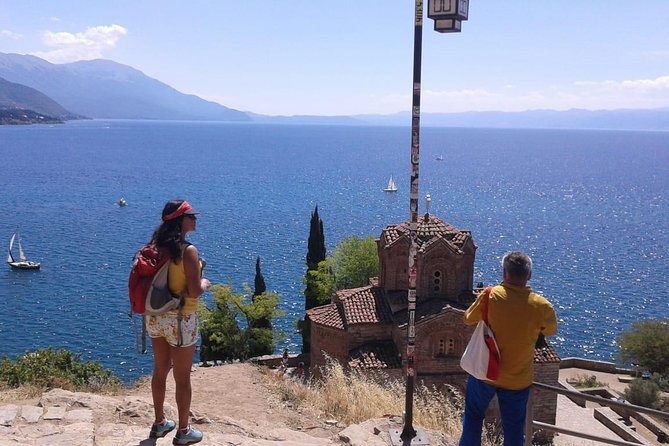
The route turns north toward Montenegro and Lake Skadar, also called Shkodra Lake. Shared by Albania and Montenegro, it is the largest lake in the Balkans and a protected natural area.
The lake supports more than 260 bird species, including pelicans and herons, along with fish and distinctive plant life. The scheduled hour is best viewed as a scenic introduction rather than a full nature excursion. A boat trip is not listed, so do not assume one is included.
Virpazar is a small lakeside village and an entry point to the national park. Stone bridges and traditional houses give it a slower feel after several city visits. You can walk around the local market or sit with coffee or local wine while looking across the water.
This is one of the gentler days, although the road distance still matters. Podgorica follows, with a short visit and free evening time. Possible sights include the Millennium Bridge, the old Ribnica River, and Independence Square. Dinner is on your own, so this is a good night to ask the guide for a restaurant suggestion. Gesi has been especially helpful with food recommendations in the various towns.
Day 7: Blagaj and Mostar’s Ottoman architecture
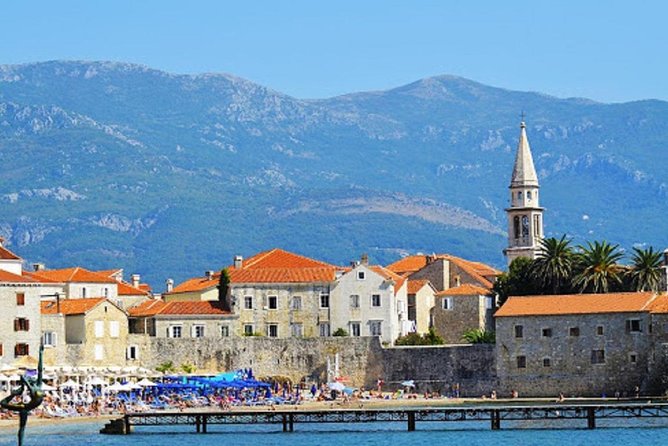
After crossing into Bosnia & Herzegovina, you stop at Blagaj, a small Ottoman-era town outside Mostar. Its setting at the foot of a cliff, beside the blue waters of the Buna River spring, makes it one of the most scenic stops on the route.
You receive about an hour here. That is enough to see the spring area and the historic setting, but not enough for an extended visit if you want to linger beside the water.
Mostar is the final major sightseeing stop. The Old Bridge, or Stari Most, is a UNESCO site and a fine example of 16th-century Islamic architecture. The bridge and the river are the visual heart of the city, but the surrounding lanes matter just as much.
The Old Bazaar has colorful shops and a lively feel, while the words Don’t Forget appear around town as a reminder of Mostar’s wartime destruction and divided past. That context gives the city more weight than a simple bridge photograph.
You also visit Bišćevića Kuća, a 17th-century Ottoman riverside house. Its preserved rooms offer a closer look at how a wealthy Ottoman family lived. Two hours in Mostar lets you see the bridge, bazaar, and house, though you will need to manage your time carefully.
Hotels, meals, transport, and the real price
The price is $3,434.13 per person. That is a serious sum, but the tour covers eight days of private transportation, a tour leader, hotel pickup and drop-off, entry tickets for listed sites, tourist taxes, international car insurance, road taxes, petrol, and accommodation with breakfast.
For a six-country route with multiple border crossings, those transport costs add real value. Booking separate transfers across Montenegro, Albania, North Macedonia, Kosovo, Bosnia & Herzegovina, and Croatia would take time and could become expensive quickly.
The price is based on double, twin, triple, or quadruple occupancy in three-star hotels. A single room costs an extra 50 euros per night. This is where expectations matter most. The accommodation is practical rather than luxurious, and one assessment of the trip found the hotels disappointing, with small rooms and weak breakfasts in several locations.
Breakfast is included, but lunches, dinners, drinks, snacks, souvenirs, and personal spending are not. The inclusion notes specify six breakfasts, even though the trip lasts eight days, so ask the operator exactly which mornings are covered. You should also set aside money for meals at places such as Mrizi i Zanave and for café stops in Virpazar and Podgorica.
Vehicle reliability is worth discussing. One trip had a car problem on the first day, and another used an electric car that required frequent charging stops and long walks to charging stations. These problems disrupted the schedule, but the operator responded by arranging another car and guide in one case. I would confirm the vehicle type before departure, especially if you want to avoid charging-related delays.
Who should book this Balkan tour?
I would choose this tour if you want a guided overview of the western Balkans and value ease of transport over long stays. It suits people who enjoy old towns, religious architecture, political history, local food, crafts, and changing scenery.
It is also a good fit if you are a pair or small group that wants personal attention without hiring a completely private guide. The maximum of 10 people keeps the experience smaller, while group discounts may help reduce the cost for larger bookings.
I would hesitate if you dislike early starts, border crossings, long drives, or changing hotels. The route is demanding, and Berat, Ohrid, Skopje, and Mostar could all justify more time than the schedule allows.
The guide can shape the trip. Migen A. was praised for adapting the schedule and accommodation needs, while Gesi received especially strong praise for his care, regional explanations, and food advice. Tipping is not included, but it is suggested as a way to thank the guide and driver.
Should you book Pearls of the Balkans?
Book it if your goal is to see a large part of the Balkans in one organized journey, with transport and border logistics handled for you. The unusual farm, paper, and mask-making stops give the route more personality than a simple checklist of capital cities.
Skip it if you want polished hotels, generous free time, or a relaxed holiday. At this price, the accommodation could disappoint, and the packed route demands patience. Before paying, confirm the pickup time, vehicle type, exact breakfast coverage, room arrangement, and single-room supplement.
The cancellation terms are strict: the booking is non-refundable and cannot be changed. That makes it even more important to check those practical details before committing.
FAQ
Where does the Pearls of the Balkans tour start and finish?
The tour starts in Dubrovnik, Croatia, and returns to the meeting point in Dubrovnik. Hotel drop-off in Dubrovnik or Kotor is included.
What time does the tour begin?
The stated start time is 7:30 a.m. The pickup details also allow Dubrovnik pickup at 9:00 a.m. or Kotor pickup at 11:00 a.m. on request, so confirm the exact arrangement at least 12 hours before departure.
How many people can join the tour?
The maximum group size is 10 people.
Is transportation included?
Yes. Private transportation, petrol, road taxes, tourist taxes, international car insurance, and hotel pickup and drop-off in Dubrovnik or Kotor are included.
Are meals included?
Accommodation and breakfast are included, with the inclusion details specifying six breakfasts. Lunches, dinners, drinks, and snacks are not included.
What type of accommodation is provided?
The price is based on double, twin, triple, or quadruple room occupancy in three-star hotels. Single-room occupancy is available for an additional 50 euros per night.
Is the tour refundable if I cancel?
No. The experience is non-refundable and cannot be changed after booking.
Just added around Dubrovnik
- Dubrovnik Sunset Mountain Tour With Wine★ 5.0 · 9 reviews
- From Dubrovnik: Mali Ston Oyster Paradise Tour with Transfer★ 4.8 · 9 reviews
- Dubrovnik: Private Panoramic Half-Day Buggy Tour with Brunch★ 4.6 · 9 reviews
- Luxury Day tour to Mostar and Kravice waterfalls★ 5.0 · 9 reviews
- Sarajevo & Mostar Private Day Tour from Dubrovnik★ 4.5 · 9 reviews
- Blue Sea & Black Mountains – Montenegro★ 5.0 · 9 reviews
- Montenegro from Dubrovnik Private Tour★ 5.0 · 9 reviews
- Ston Oysters & Wine Tasting Tour from Dubrovnik★ 5.0 · 9 reviews
Private, compared.
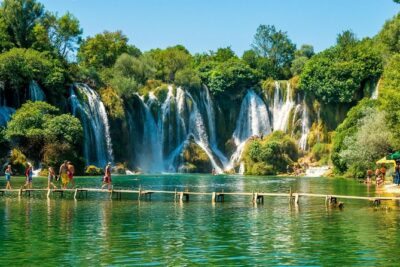
Mostar and Kravice Waterfalls Tour from Dubrovnik (Semi-Private)
Read our review →
Blue & Green Caves Private Boat Tour with Drinks
Read our review →
Dubrovnik Private Speedboat Tour to Elaphite Islands with Drinks
Read our review →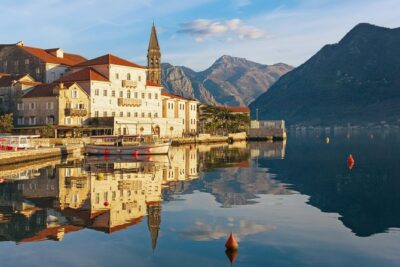
Private Tour: Montenegro Day Trip from Dubrovnik
Read our review →
PRIVATE Walking Tour of Diocletian’s Palace & Old Town
Read our review →
Tour The Game of Thrones – Private Walking Tour
Read our review →
Private Krka Waterfalls tour with 30min Boat Cruse
Read our review →