
Reviewed · TROGIR TOURS
Nocturnal Tours Trogir & Split – Myths and Legends of Old Trogir Tour
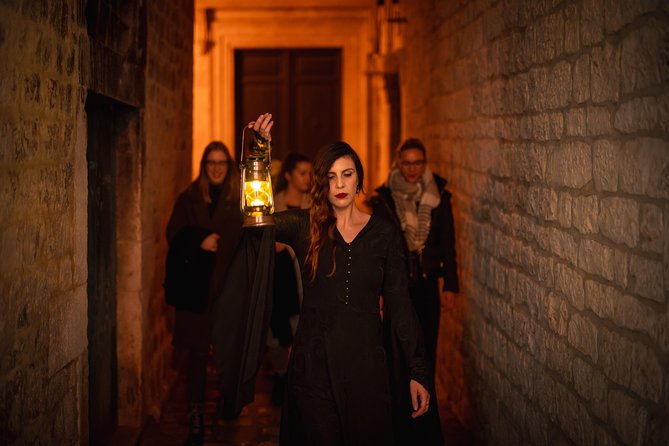
Trogir gets stranger after sunset. I like the lantern-lit walk through narrow streets and the guides’ theatrical storytelling, especially when Doris or Jelena shifts from friendly host to spooky character. The small-group format, advertised for up to eight people, also gives the hour a personal feel. The main drawback is pace: with six stops packed into about an hour, some stories and landmarks receive only a brief look.
This is not a standard history walk. You’ll hear about noble families, broken hearts, plague, witchcraft, public punishment, and a love story tied to Kula Karmelengo. I also like that the tour uses Trogir itself as the stage, rather than relying on a lecture in one square. At $28.83 per person, it is fair value if you enjoy stories and atmosphere more than long architectural explanations.
The experience suits families with teenagers, couples, and anyone who has already seen Trogir by day and wants a different side of the town. It is less useful if you want detailed dates, museum access, or a slow examination of every monument.
In This Review
- Key points to know before you book
- Why Trogir works so well after dark
- Starting at the North Gate
- Noble intrigue and the lanes of old Trogir
- Kula Karmelengo and a story of love
- The Kairos Collection and Trogir’s ancient symbol
- Central Square and the plague story
- The Loggia, the Pillar of Shame, and medieval punishment
- What the guide brings to the experience
- Price, length, and group size
- Who should book this night walk
- Should you book the Myths and Legends of Old Trogir Tour?
- FAQ
- Where does the tour start?
- Where does the tour end?
- How long does the tour last?
- What language is the tour offered in?
- How many people can join the tour?
- Can I cancel for a refund?
Key points to know before you book
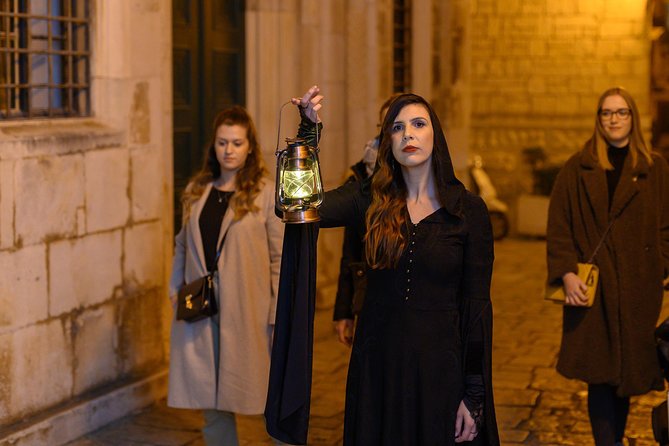
- Lantern-lit old-town walk: Follow a local guide through Trogir’s narrow medieval lanes after dark, with stories set against ancient stone walls.
- Two thousand years of myths: The tales reach from Greek-colonist foundations in the 3rd century BC to medieval crime, plague, and punishment.
- Strong theatrical element: Guides such as Doris and Jelena use character, mood, and acting rather than giving a plain sequence of facts.
- Six atmospheric stops: The route includes the North Gate, Kula Karmelengo, the Kairos Collection, Central Square, and the Loggia before ending near St. Lawrence’s Cathedral.
- Short, small-group format: The walk lasts about one hour, with published information describing a maximum of eight people, while another booking note lists ten, so confirm the exact group limit when reserving.
- Good weather matters: Poor weather can lead to a new date or a full refund, and free cancellation is available up to 24 hours before the start.
Why Trogir works so well after dark
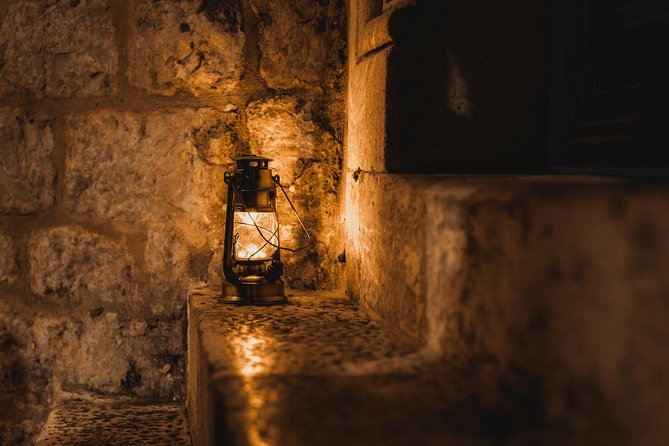
Trogir is a compact historic town, and that makes it a good setting for a night walk. You are not crossing long modern streets between sights. Instead, the route moves through old gates, squares, waterfront fortifications, and stone passageways where a guide can make the past feel close at hand.
The tour places special weight on the city’s long timeline. Greek colonists founded the settlement in the 3rd century BC, and later Hellenistic, Roman, and medieval layers remain part of its identity. You will not receive a full academic account of each period in sixty minutes. The aim is different: the guide uses selected episodes to give the old streets a human voice.
That approach explains why the experience can feel more memorable than a standard orientation walk. A conventional tour might point out a gate, fortress, or cathedral and list its construction dates. Here, the same places become settings for betrayal, revenge, fear, devotion, or unlucky decisions.
The lantern is more than a prop. It gives the group a visual focus and helps create a clear rhythm as you move from one story to the next. It also suits Trogir’s tight lanes, where a guide standing in the glow of a small light can hold your attention better than someone speaking from a busy square in daylight.
Still, you should set the right expectations. This is a storytelling tour with historical material, not a ghost-hunting expedition and not an in-depth architecture lesson. Some details are presented through legend and superstition. I would treat the darker stories as folklore shaped by local memory, not as verified historical records.
Other Trogir trips people book alongside this one:
- Blue cave, Mama Mia and Hvar, 5 island speedboat tour from Trogir
★ 5.0 · 2,861 reviews - From Trogir: Three Islands Half-Day Speedboat Tour
★ 4.8 · 804 reviews - From Trogir or Split: Full-Day Blue Cave & Hvar Island Tour
★ 4.7 · 413 reviews
Starting at the North Gate
The tour begins at Ul. Gradska vrata 6, near the town entrance. The first official stop is the North Gate, where the guide introduces medieval Trogir through subjects such as the Black Death, witchcraft, superstition, slavery, and the medieval view of women as a dangerous sin.
That list gives you a good sense of the tone. The stories are dark, but the experience is not presented as a grim lecture. The guides add humor and performance, which helps keep the material suitable for a mixed group. Families with older children and teenagers can enjoy the suspense without needing a serious interest in medieval studies.
The North Gate also works as a natural beginning. You pass through an actual threshold, leaving the present-day streets behind and entering the older town. The guide’s invitation to follow the light turns a simple entrance into part of the performance.
You should pay attention to the surroundings as much as the narration. The route uses the gates and lanes as evidence of how a medieval town controlled movement and protected itself. The stop is listed at about five minutes, so do not expect a long explanation of the gate’s construction or defensive system.
Noble intrigue and the lanes of old Trogir
The main historic center receives about twenty minutes, making it the longest single portion of the tour. Here, the guide brings together stories of noblemen, family intrigues, murders, broken hearts, and revenge.
This is where the format earns its price. Trogir’s medieval lanes are attractive by day, but the same streets feel more enclosed at night. The guide can connect a story to a doorway, corner, or wall, giving you a reason to look closely instead of simply walking past.
The strongest part of this section is likely the combination of movement and narrative. You are not standing in one place while facts pile up. You walk through the town while the story develops, then pause when the guide reaches an important moment.
The trade-off is that the information may be selective. If you want a complete account of Trogir’s political history or a detailed explanation of its Roman remains, use this experience as a lively introduction and choose a separate daytime visit for more depth.
One practical point matters here: nightlife can be lively on a Friday evening, according to the experience details. A good guide can hold the group’s attention, but conversation, restaurant activity, and passing pedestrians may occasionally compete with the performance. That is part of seeing a real town after dark, though it may slightly reduce the quiet, eerie mood.
Kula Karmelengo and a story of love
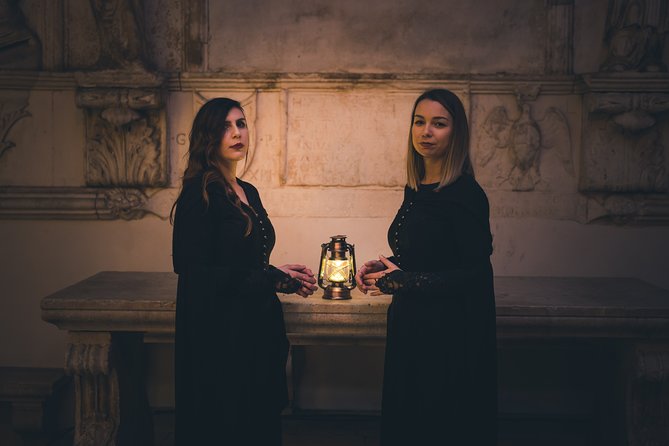
Kula Karmelengo receives around ten minutes. The fortress is the setting for a tale of great love and even greater despair, a natural fit for a tour built around passion, misfortune, and old secrets.
The stop gives the walk a change of scale. After narrow lanes, you reach a larger medieval defensive structure with a stronger sense of power and danger. The guide uses the fortress as a backdrop rather than treating it as a list of military facts.
If you enjoy historical romance, this may be one of the most appealing parts of the route. The story adds emotion to a building that could otherwise seem like another impressive stone monument. It also shows how local legends often survive because they attach themselves to places people can still see.
Do not expect a full fortress tour. The stop is short, and the focus is the love story. If Kula Karmelengo is high on your sightseeing list, return during daylight so you can take in its form at your own speed.
Something different for another day:
- Half Day Speedboat Tour to Three Islands from Trogir
★ 5.0 · 401 reviews - Blue Lagoon & Šolta Island from Trogir LUNCH & DRINKS INCLUDED
★ 4.5 · 374 reviews - Trogir, Žedno: Čiovo Island 100% Off-Road Quad ATV Tour
★ 4.9 · 331 reviews - Trogir: Blue Lagoon and 3 Islands Speedboat Tour
★ 4.8 · 263 reviews
The Kairos Collection and Trogir’s ancient symbol
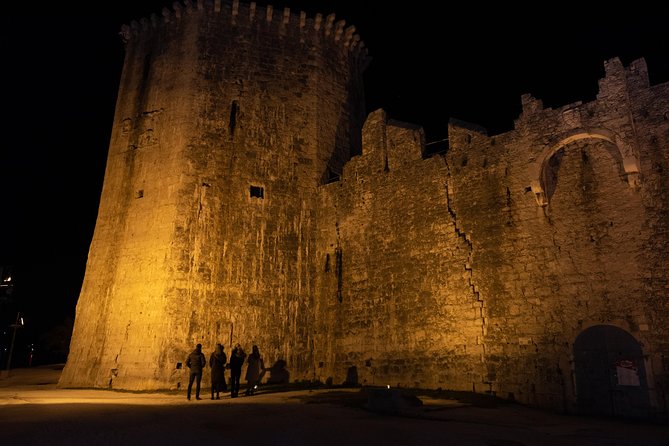
The Kairos Collection stop connects medieval atmosphere with the city’s much older Greek past. It refers to the Benedictine Monastery of Saint Nikola, described as the oldest still-active monastery of its kind, and to the sculptural relief of Kairos dating from the 3rd century BC.
Kairos is presented as one of Trogir’s most important symbols. The relief is kept by the Koludrice, the nuns associated with the monastery, four of whom are said to spend their lives behind its walls. That detail adds a human and secluded element to the story, but it also needs careful interpretation.
The tour does not promise a museum visit or admission into the monastery. The stop is listed as free admission and lasts about ten minutes, so you should expect the guide to explain the place and its connection to Kairos rather than assume you will have extended interior access.
This is an especially useful part of the tour for anyone who likes the links between myth, art, and city identity. You are reminded that Trogir’s story did not begin in the Middle Ages. The ancient relief ties the modern town to its earliest foundations.
Central Square and the plague story
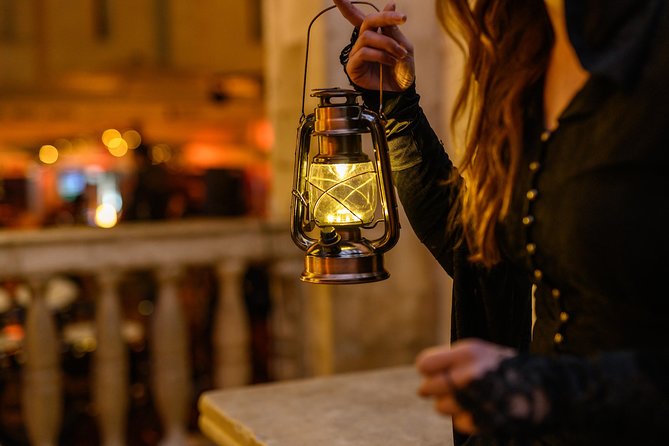
At the Central Square, the guide tells the story of Marin Kjudis, described as a great hero and the unintentional cause of a plague outbreak in Trogir. The stop takes about ten minutes.
This episode sounds designed for suspense because it combines courage with unintended consequences. It also fits the tour’s larger theme: people in old towns lived with decisions that could affect an entire community, while disease and superstition shaped how those decisions were remembered.
The square is a strong place for public storytelling. It gives the group room to gather, and the open setting contrasts with the tight streets earlier in the route. You can listen while looking at the civic heart of the town, where public life, authority, and punishment once intersected.
Again, the story is likely more important here than a detailed survey of the square’s buildings. If you want an architectural reading of every façade around the plaza, this will feel brief. If you want one memorable local tale that helps you remember the place, it works well.
The Loggia, the Pillar of Shame, and medieval punishment
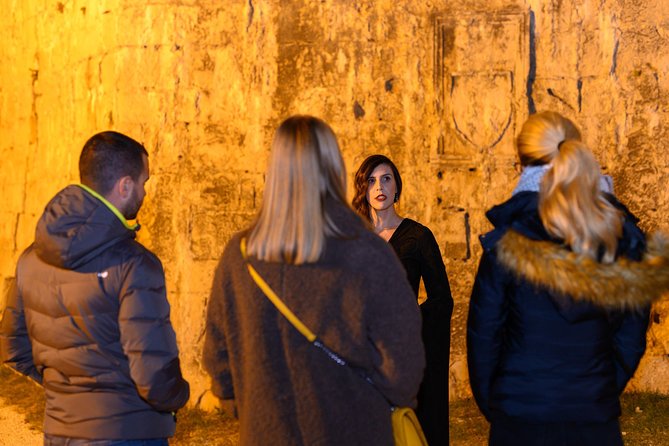
The final stop is the Loggia doorway, with about fifteen minutes devoted to crime and punishment. The guide covers felons, thieves, pyromancers, killers, and traitors, then explains the Pillar of Shame, where a convicted person could be displayed publicly.
This may be the most theatrical section of the walk. The Loggia is not just a pretty historic structure here. It becomes a reminder that medieval justice was public, physical, and intended to humiliate as much as punish.
The longer time allocation gives the guide room to build the mood and explain why a public display mattered. You can also see how an old doorway or civic building held several roles at once: a place of passage, authority, judgment, and community spectacle.
The tour ends at St. Lawrence’s Cathedral on Trg Ivana Pavla II. That is a useful finish because the cathedral is easy to locate in the historic center, and you can continue your evening from there. The end point is not the same as the start, but both are within the compact old town.
What the guide brings to the experience
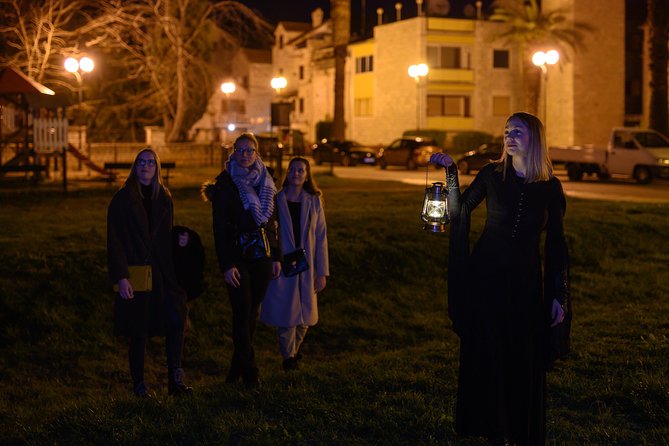
The guides are central to the value here. The strongest praise is directed at their acting, warmth, and ability to keep the group focused. Doris is singled out for making the theatrical approach work, while Jelena is described as friendly, approachable, and gifted at shifting between her normal manner and a spooky character.
That balance matters. A guide who overplays the fright can make the tour feel forced. A guide who simply reads old tales aloud can lose the group in the first dark lane. The best moments seem to come from a mix of friendly conversation, dramatic delivery, and genuine affection for Trogir.
The tour also includes a small gift tied to the playful idea of making it out alive. It is a minor detail, but it gives the experience a clear ending and adds a bit of fun for families and younger participants.
The available praise is unusually consistent, with a five-star rating from 33 reviews and 100 percent recommendation. I would still read that result in context. This is a niche experience, so people who dislike theatrical storytelling may not respond in the same way. The high marks point strongly to guide quality and atmosphere, not necessarily to exhaustive historical coverage.
Price, length, and group size
At $28.83 per person, the tour sits in a reasonable range for a one-hour guided experience in a major historic center. The price makes the most sense if you value a local guide, a planned route, and a distinctive evening activity rather than simply walking through Trogir on your own.
The tour is advertised at about one hour, though one account describes a walk lasting around 1.25 hours. Allow a little extra time so you are not rushing to dinner, a ferry, or another evening booking.
Small groups are a major advantage. The highlights describe a maximum of eight people, while the additional booking information gives a maximum of ten. Because those figures differ, check the confirmed group size before you pay if intimacy is important to you.
The walk is offered in English and uses a mobile ticket. Confirmation arrives at booking. Service animals are allowed, public transportation is nearby, and most people can participate. The route is a walking experience through historic streets, so anyone concerned about mobility should ask the provider for current route details before booking.
Free cancellation is available until 24 hours before the start time. If you cancel later, no refund is provided. Poor weather can cause cancellation, in which case you can receive another date or a full refund. The same choice applies if the minimum number of participants is not reached.
Who should book this night walk
I would choose this tour for:
- Families with teenagers who enjoy spooky stories without wanting a full horror attraction
- Couples looking for a different evening activity in Trogir
- First-time visitors who want a quick orientation with memorable local tales
- People who enjoy folklore, acting, and unusual details about old towns
- Repeat visitors who have already seen Trogir’s main buildings in daylight
I would be more cautious if you want a serious history seminar, extensive interior access, or a slow photographic walk. The route is short, the stories take priority, and six stops leave limited time for independent exploration.
Wear comfortable shoes and arrive ready to walk rather than stand in one place. Since the tour depends on weather and takes place after dark, keep your schedule flexible and check the meeting details carefully.
Should you book the Myths and Legends of Old Trogir Tour?
Book it if you want Trogir to feel like a place of human drama, not just a collection of old buildings. The lantern, compact route, and guides’ acting give the town a strong evening character, while stories about Kairos, plague, forbidden behavior, love, and public punishment provide plenty to remember.
The best reason to go is the guide-led performance. Doris and Jelena receive especially warm praise for making the stories feel personal and lively. The main caution is the limited length and theatrical tone. You will leave with a handful of vivid stories, not a complete history of Trogir.
At $28.83, I consider it a good buy for an hour of atmosphere and local storytelling, particularly for families with teenagers and visitors who want something beyond a daytime sightseeing circuit.
FAQ
Where does the tour start?
It starts at Ul. Gradska vrata 6, 21220 Trogir, Croatia.
Where does the tour end?
The walk ends at St. Lawrence’s Cathedral on Trg Ivana Pavla II in Trogir.
How long does the tour last?
The stated duration is approximately one hour. One description of the walk gives a duration of about 1.25 hours, so allow a little extra time.
What language is the tour offered in?
The tour is offered in English.
How many people can join the tour?
The experience is described as a guaranteed small-group tour with a maximum of eight people. Another booking detail lists a maximum of ten, so confirm the exact limit when booking.
Can I cancel for a refund?
Yes. You can cancel at least 24 hours before the local start time for a full refund. Late cancellations and changes are not accepted for a refund. If poor weather or an insufficient number of participants cancels the experience, you can receive another date or a full refund.
Just added around Trogir
- Split: Hvar, Brač, and Pakleni Cruise with Lunch and Drinks★ 4.0 · 9 reviews
- Trogir 1,5-Hour Small Group City Tour★ 4.5 · 10 reviews
- Boat rental – 1 day from Trogir★ 4.5 · 10 reviews
- 50 Shades of Blue★ 5.0 · 10 reviews
- From Trogir, Seget, Okrug: Krka Waterfalls & Šibenik Culture Tour★ 5.0 · 10 reviews
- Private Captain Tailored tour – from Split and Trogir★ 5.0 · 11 reviews
- Private boat tour for small groups to Blue Lagoon and Solta Island★ 5.0 · 11 reviews
- Trogir: White Lagoon, Maslinica & Blue Lagoon Speedboat Tour★ 4.8 · 11 reviews
Trogir Tours, compared.

Blue cave, Mama Mia and Hvar, 5 island speedboat tour from Trogir
Read our review →

From Trogir or Split: Full-Day Blue Cave & Hvar Island Tour
Read our review →
Half Day Speedboat Tour to Three Islands from Trogir
Read our review →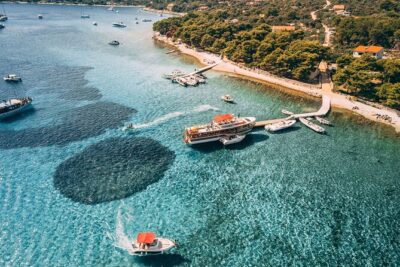
Blue Lagoon & Šolta Island from Trogir LUNCH & DRINKS INCLUDED
Read our review →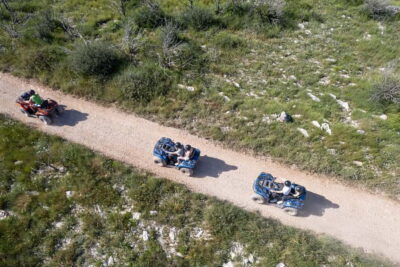
Trogir, Žedno: Čiovo Island 100% Off-Road Quad ATV Tour
Read our review →
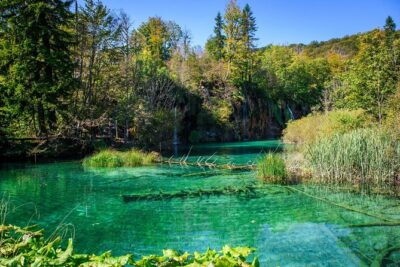
Zagreb to Split Group Transfer with Plitvice Lakes guided Tour
Read our review →Browse the lists this tour appears in