
Reviewed · CROATIA
Give Bees a chance!
Bees make a small island visit surprisingly memorable. This one-hour stop on Solta island brings you close to a real hive, explains the work bees do for our food supply, and ends with generous honey tasting. I like the live hive display, which lets you see the inner workings without getting stung. I also like the warm, funny presentation by Goran, a third-generation beekeeper who makes the subject easy for all ages.
The main drawback is the short running time. At about one hour, this is a focused talk and tasting rather than a full day of farm life. You will also need to reach Rogač Port or arrange the included pickup carefully, though hotel and port transfers make the visit easier to fit into a Solta day.
In This Review
- Key points before you book
- Why this Solta island visit is worth your time
- Starting at Rogač Port
- Meeting a third-generation beekeeper
- Seeing inside a real hive
- Tasting Solta honey and hive products
- The local family setting
- How the one-hour format works for your day
- Who will enjoy this most
- Practical details that affect your decision
- Should you book Tvrdic Honey?
- FAQ
- Where does the experience start and end?
- Is pickup included?
- How long does the experience last?
- Is the tour offered in English?
- How many people can join the activity?
- What happens if I need to cancel?
Key points before you book
- A live hive without the sting risk: You can watch bees at work through a protected display and learn how the colony functions.
- Goran sets the tone: His family has kept bees for generations, and his funny, natural style keeps the talk lively.
- Rosemary honey is the taste to seek out: The island’s rosemary variety receives special praise and makes a fine souvenir.
- More than a honey tasting: The talk covers propolis, pollen, royal jelly, nutrition, healthcare, and the problems bees face today.
- Small groups keep it personal: The maximum group size is 15, giving you a better chance to ask questions.
- Useful for ferry visitors: Pickup and drop-off are offered at hotels and the port, with the activity beginning and ending at Rogač Port.
Why this Solta island visit is worth your time
Solta is easy to treat as a quick stop between Split and the beach. That would be a shame. The island’s appeal is tied to its slower pace, local food, and family trades. A visit to Tvrdic Honey gives you a clear look at one of those trades without asking for half a day or a large budget.
The price is about $30.04 per person. For an hour-long activity, that is not the cheapest casual tasting you will find in Croatia. Still, you are paying for a guided explanation, access to a real hive display, several honey products, and a family-run setting rather than simply buying a jar in a shop.
I see the value in the combination. You get a lesson, a tasting, and a practical connection to Solta’s countryside. If you already know a great deal about beekeeping, the talk may feel basic. For most people, especially families and first-time visitors, it offers enough substance to make the price fair.
The high recommendation rate and 4.9 rating point to a consistently strong experience, but the best reason to book is more specific: Goran appears to be the heart of the visit. His humor and relaxed presentation help turn facts about insects into a story you can follow.
Other Dalmatia trips people book alongside this one:
- Whitewater Rafting on Cetina River from Split or Šestanovac
★ 5.0 · 560 reviews - Extreme Canyoning on Cetina River from Split or Šestanovac
★ 5.0 · 262 reviews - Montenegro: Bay of Kotor Day Trip from Dubrovnik English -Español
★ 4.5 · 188 reviews
Starting at Rogač Port
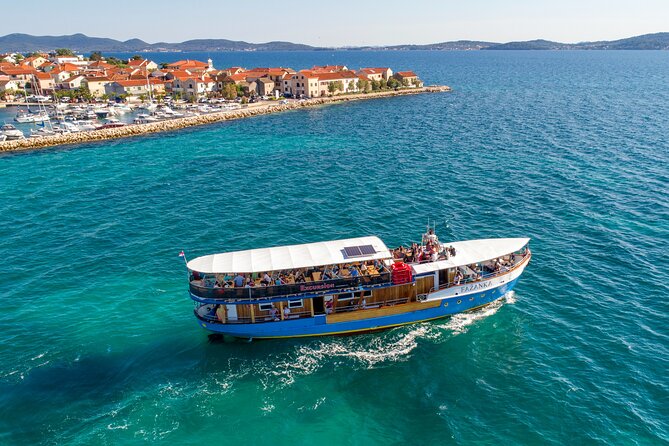
The stated meeting point is Rogač Port, at D112 32, 21430 Rogač, Croatia. The activity ends back at the same meeting point, so you are not left trying to work out a new departure point afterward.
That arrangement is useful if you arrive by ferry or are building a short island outing around the port. Hotel and port pickup and drop-off are included, which can save time and reduce the need to arrange local transport separately. Still, check the pickup details at booking, since the tour information names Rogač Port as the start and end point.
The visit is offered in English. Confirmation arrives when you book, and the activity accepts a maximum of 15 people. That is small enough for a conversational feel, though not necessarily a private tour. If the topic matters to you, ask questions as you go rather than waiting until the end.
The timing deserves attention. With a duration of roughly one hour, this is easy to pair with a ferry arrival, a walk around the island, or a meal elsewhere. It is not designed to fill a full afternoon. Allow extra time around the official hour for pickup, ferry schedules, and any browsing or purchases at the honey shop.
Meeting a third-generation beekeeper
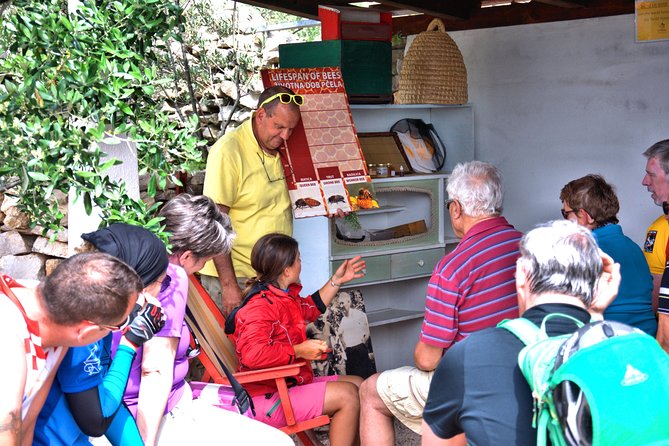
Goran is repeatedly praised for his presentation style. He is described as funny, natural, warm, and able to hold the attention of children, teenagers, and older adults. That matters here because bee biology can become dry if it is delivered as a list of facts.
His family has kept bees for generations, and that family link gives the talk a practical center. You are not only hearing general information about honey. You are also getting an explanation shaped by people who work with bees and make products from the hive.
Expect the main talk to cover the hidden life of bees and the way a colony functions. The focus is not only on honey production. You will hear about pollen, propolis, and royal jelly, along with the role bees play in food production and human health.
The presentation also addresses modern pressures on bees. The purpose is not to frighten you into buying something. It is to explain why these insects matter and why the phrase Give bees a chance is more than a catchy name.
Goran’s humor is an important part of the value. Several comments about his funny delivery suggest that the session avoids a formal classroom feel. You still come away with useful information, but you do not need a specialist’s interest in insects to enjoy it.
Seeing inside a real hive
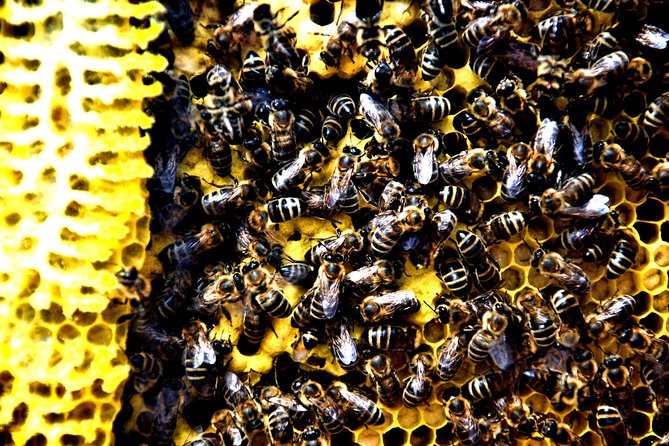
The live hive display is the visit’s most unusual feature. You can see the internal workings of a real beehive without the danger of being stung. That makes the activity more immediate than a standard tasting, where the bees remain an abstract part of the story.
The display lets you connect the explanation to something visible. As Goran talks about the colony, you can watch the hive rather than simply picture it. One account especially valued being able to watch a live hive while learning about pollen and the products collected from it.
Do not expect to handle open frames or work beside unprotected bees. The key promise is close viewing without the sting risk. That is a good fit for curious children and cautious adults who want to understand a hive but do not want a practical beekeeping lesson.
This part also gives the one-hour visit a clear purpose. You are not just sampling a local food. You are seeing the source and learning how the products begin. That link between living colony and finished jar makes the tasting more meaningful.
Something different for another day:
- Adrenaline Quad Safari Tour
★ 5.0 · 177 reviews - Canyoning on Cetina River from Split or Šestanovac
★ 5.0 · 173 reviews - Dubrovnik Airport Transfer (Private transfer)
★ 5.0 · 135 reviews - Islands & Caves Private Tour with pickup, drinks & fuel included
★ 5.0 · 102 reviews
Tasting Solta honey and hive products
The tasting is a central part of the visit, and the local honey receives strong praise. You can expect several honey varieties, each with a different character, along with products connected to the hive.
Rosemary honey is the standout choice. It is repeatedly singled out for its flavor and its connection to the island. If you plan to buy only one jar, this is the variety I would try first.
The wider tasting can include propolis, pollen, and royal jelly. The exact selection may vary, so do not assume every product will be presented in the same form each time. The useful point is that the session shows how a hive produces more than honey.
You may also see an impressive collection of honeys from around the world. People who have visited the family business have sent honey from every continent as part of the global Give Bees a Chance effort. This collection adds an international angle to an otherwise local stop.
That display is especially helpful if you enjoy food comparisons. Solta honey gives you a taste of the island, while jars from elsewhere show how flowers and place affect the finished product. It turns a simple sample into a lesson in regional flavor.
Bring a little room in your bag if you want to shop. The information confirms a honey shop, but it does not state specific prices, packaging rules, or shipping options. For a flight or ferry connection, ask before buying large jars.
The local family setting
Tvrdic Honey is presented as a family operation in Grohote, while the listed meeting point is Rogač Port. This means the port information and the family business location should be treated as two parts of the visit, not as identical addresses.
The family atmosphere is one of the strongest reasons to choose this activity over a generic food stop. The setting feels tied to a working tradition, and the family members are willing to answer questions and share stories. You get a sense of how beekeeping has continued across generations.
That personal touch also makes the experience suitable for mixed-age groups. A biking group with people from 15 to 70 enjoyed the visit, and a family found that Goran could keep every age interested. You do not need to be a food expert, a beekeeper, or an environmental campaigner.
The shop is part of the charm, but the talk matters more than shopping alone. If you only want to buy honey, you may not need to book a guided visit. If you want the family story, the live hive, and the explanation behind the products, reserve the activity rather than simply turning up at the shop.
How the one-hour format works for your day
The experience is compact. You arrive at the agreed meeting point or use the offered pickup, take part in the presentation, see the hive, taste the products, and return to the starting point.
The supplied details do not give a minute-by-minute schedule, so I would not expect a fixed sequence beyond those main elements. The pace may depend on the group and on how many questions people ask. A maximum of 15 participants helps, but a lively group can still affect the timing.
The short format is useful in several situations:
- You have limited time on Solta.
- You are visiting from a ferry or cruise stop.
- You want an activity that works for children and adults.
- You prefer a local food experience over a long organized excursion.
- You want time afterward for other island plans.
The same format can be a limitation if you want to visit working hives outdoors, learn to use beekeeping equipment, or spend time in the countryside. None of those features is promised. This is a guided introduction, not a full agricultural tour.
I would plan it as one part of a Solta day, not as the day’s only event. The port transfer makes scheduling easier, but you should still leave enough time around ferry movements. The tour lasts about an hour, while your complete outing will take longer once transport and personal shopping are included.
Who will enjoy this most
Families are a strong match. The protected hive display gives children something real to watch, and Goran’s humor keeps the educational part from feeling heavy. Parents should still judge their own children’s interest and attention span, since the experience is built around a talk and tasting rather than active play.
Food lovers will also find plenty to like. The honey selection lets you compare flavors, and the rosemary honey offers a clear Solta connection. Propolis, pollen, and royal jelly add variety for anyone interested in traditional hive products.
This is also a good choice for people who care about nature but do not want a strenuous outing. The information focuses on the importance of bees, their role in nutrition and healthcare, and the challenges they face. You can learn a great deal without hiking or spending hours outdoors.
The visit suits mixed groups particularly well. The humor, tasting, and live display give different people different reasons to pay attention. One person may care about food, another about ecology, and another about the family story.
You may want to skip it if you dislike honey, have no interest in insects, or want a long practical lesson. The tasting is not a side detail. It is one of the main parts of the visit.
Practical details that affect your decision
The activity is offered in English, with mobile tickets and confirmation at booking. Pickup is offered from hotels and the port, and drop-off is included. Since the published meeting point is Rogač Port, confirm exactly where your pickup will occur if you are staying elsewhere on Solta.
The maximum group size is 15. Most people can participate, and a child rate is available only when the child shares with two paying adults. The supplied details do not list a separate accessibility policy, so contact the operator if you need specific assistance.
Drinks, food, and lunch are not included. That is easy to overlook because the honey tasting is part of the activity. Plan to eat separately, and do not expect a meal to follow the presentation.
You can cancel for a full refund if you do so at least 24 hours before the local start time. Cancellations or changes made later are not accepted for a refund. That rule is reasonable for a small operation, but it makes it important to match the booking with your ferry and hotel plans.
The experience is often booked about 36 days ahead. That does not mean you must reserve that far in advance, but it suggests that popular dates can fill. A small group, an English presentation, and limited time on an island can create tight availability.
Should you book Tvrdic Honey?
I would book this if you want a short, personal Solta experience with a clear local connection. The live hive, rosemary honey, family tradition, and Goran’s lively presentation give the visit more substance than a quick shop stop.
The price makes sense if you value explanation and tasting together. It is less compelling if you only want to purchase honey or if you expect an outdoor beekeeping session.
Book it as a compact island highlight, especially if you are arriving through Rogač Port, traveling with family, or looking for something that suits several generations. Reserve the guided visit rather than simply arriving at the shop, and leave enough time around your ferry schedule. If you do go, try the rosemary honey and give the bees a chance.
FAQ
Where does the experience start and end?
The activity starts at Rogač Port, D112 32, 21430 Rogač, Croatia, and ends back at the meeting point.
Is pickup included?
Yes. Hotel and port pickup and drop-off are included.
How long does the experience last?
The visit lasts approximately one hour.
Is the tour offered in English?
Yes. English is one of the listed languages.
How many people can join the activity?
The maximum group size is 15 participants.
What happens if I need to cancel?
You can receive a full refund if you cancel at least 24 hours before the local start time. Cancellations or changes made less than 24 hours before the start are not accepted for a refund.
Just added around Dalmatia
- Krka Waterfalls and Sibenik Day Trip from Zadar★ 4.0 · 9 reviews
- Canoe safari adventures at Zrmanja river day tour★ 5.0 · 11 reviews
- From Split/Omiš Guided White Water Rafting Tour on Cetina River★ 5.0 · 11 reviews
- Military Tour★ 5.0 · 11 reviews
- Kayaking and mussels tasting at Krka River estuary-private tours★ 5.0 · 13 reviews
- Snorkeling tour Makarska Riviera, islands of Hvar or Brač★ 4.0 · 14 reviews
- Vis sandy beach Stand Up Paddle Tour★ 5.0 · 16 reviews
- Stiniva, Green Cave, Blue Lagoon & Secret places★ 4.5 · 23 reviews