Reviewed · PRIVATE
Dubrovnik to Athens; Semi – Private tour with Tour Leader & Car
Seven borders, one long road. This 14-day journey links Dubrovnik with Athens through Bosnia and Herzegovina, Montenegro, Kosovo, Albania, North Macedonia, and Greece. I like the small maximum group of 10 and the way the route favors castles, bazaars, family wineries, monasteries, and local food over famous city checklists. I also like that private transport, a tour leader, breakfasts, entrance fees, and hotel transfers are bundled together.
The trade-off is pace. A few days involve long drives and several border crossings, so this is best for you if you want a broad first look at the Balkans rather than slow stays in just two or three places. At $6,020.56 per person, the price is serious, though the included transport, hotels, guide, fuel, road charges, insurance, taxes, and admissions add real value.
In This Review
- Key reasons this route is worth considering
- What this Dubrovnik to Athens trip really offers
- Mostar and Sarajevo: Ottoman streets and modern scars
- Blagaj, Kotor, Budva, and Shkoder
- From Mrizi i Zanave to Prizren and Decan
- Kruja and Tirana: Albania through food and memory
- Ohrid and the quiet lakeside interlude
- Berat, Gjirokaster, and Albania’s stone towns
- Ioannina and Meteora: a dramatic final act
- Is the $6,020.56 price good value?
- Who should book this Balkan road trip?
- Should you book it?
- FAQ
- How long is the Dubrovnik to Athens tour?
- What countries does the route visit?
- What is the maximum group size?
- Is transportation included?
- Are hotels and breakfasts included?
- Are lunches and dinners included?
- Is pickup available in Dubrovnik?
- Is the tour conducted in English?
- Does the tour end in Athens?
Key reasons this route is worth considering
- Mostar, Sarajevo, and Kotor in one opening stretch: You move quickly through three of the region’s most evocative old towns.
- Albania gets the most attention: Tirana, Kruja, Berat, Gjirokaster, Shkoder, and local farms reveal a country changing fast.
- Food is part of the trip: The Tirana food tour, Mrizi i Zanave farm, Albanian raki, wineries, and Sarajevo coffee add welcome local flavor.
- The group stays small: With no more than 10 people, the tour should feel far more personal than a large coach trip.
- UNESCO sites come thick and fast: Mostar, Kotor, Ohrid, Berat, Gjirokaster, Decan, and Meteora all appear along the way.
- You need stamina: Uneven streets, steep castle approaches, early starts, and long road days are built into the experience.
What this Dubrovnik to Athens trip really offers
This is a road journey with a cultural focus. You begin in Dubrovnik, but the old city itself is not part of the guided program, so plan to explore it on your own before pickup. On Day 1, a local driver collects you from the nearest reachable point to your hotel. Cars cannot enter some parts of Dubrovnik Town, so you may need to walk a short distance with your luggage.
At the border, you meet the tour leader and continue in private transportation. That handoff is worth noting: confirm the exact meeting arrangement before departure, especially if you are staying inside the old town.
The trip uses three-star hotels, with rooms priced on double, twin, triple, or quadruple occupancy. Breakfast is included each morning, but lunches, dinners, drinks, and snacks are yours to pay for. The result is a practical package, though you should budget beyond the headline price for two weeks of meals and personal spending.
A few more tours and experiences worth a look
- Mostar and Kravice Waterfalls Tour from Dubrovnik (Semi-Private)
★ 5.0 · 3,125 reviews - Dubrovnik: Blue & Green Caves Private Boat Tour with Drinks
★ 4.7 · 814 reviews - Dubrovnik Private Speedboat Tour to Elaphite Islands with Drinks
★ 5.0 · 660 reviews
Mostar and Sarajevo: Ottoman streets and modern scars
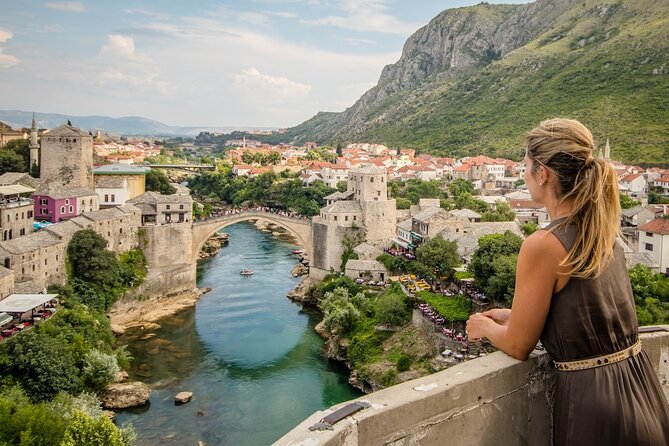
Mostar makes a strong opening stop. The Old Bridge, Stari Most, arches above the Neretva River and represents the city’s Ottoman-era character as well as its painful modern story. You get about an hour around the bridge and Old Bazaar, enough for a first walk through the cobbled lanes, mosques, shops, and stone buildings.
The repeated Don’t Forget message around town gives Mostar emotional weight. It is not simply a pretty bridge stop. You are seeing a place where old architecture, war memory, and daily life sit close together.
The 17th-century Bišćevića Kuća adds something many quick Mostar visits miss. This preserved riverside Ottoman house shows how a wealthy family once lived, with a more intimate feel than a broad city walk. Admission is included, and the visit lasts about 30 minutes.
The next day, Sarajevo brings a sharper historical contrast. Your walk covers the Ottoman and Austria-Hungarian quarters, along with mosques, churches, synagogues, bazaars, and markets. Bullet holes and cannon marks remain visible in parts of town, and the route includes uneven ground and war ruins.
Latin Bridge provides the famous World War I connection. The tour also includes Turkish coffee or tea at Caffe Divan, a small but welcome pause after the walking. I value this kind of stop because it gives you time to sit, ask questions, and watch the city instead of rushing from monument to monument.
Sarajevo receives only about three hours of listed touring time, so do not expect a full city visit. The tour gives you an informed introduction, not a deep stay. If Sarajevo is a major personal priority, add extra nights before or after the route.
Blagaj, Kotor, Budva, and Shkoder
Blagaj, outside Mostar, is a short visit with a strong setting. The Buna River springs from beneath a cliff beside an Ottoman-era town. You have about an hour to see the water and the historic surroundings, a pleasant change from the road.
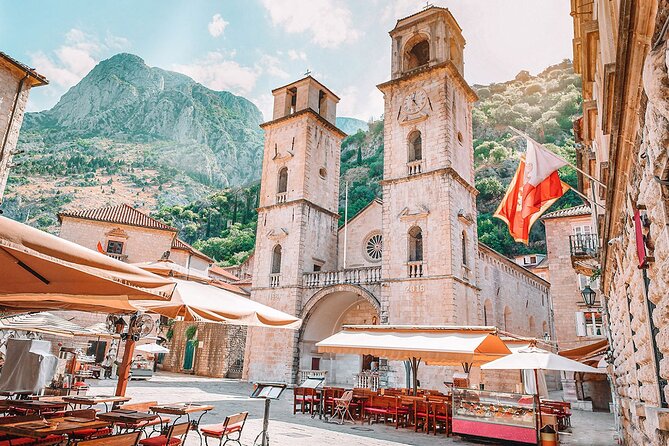
Kotor follows, with two hours in its UNESCO-listed old town and free time afterward. Its narrow streets were laid out to confuse raiders, and today that maze is part of the fun. Look for small plaques on old churches and buildings, then visit St. Luke’s Church, a place associated with unity among local communities.
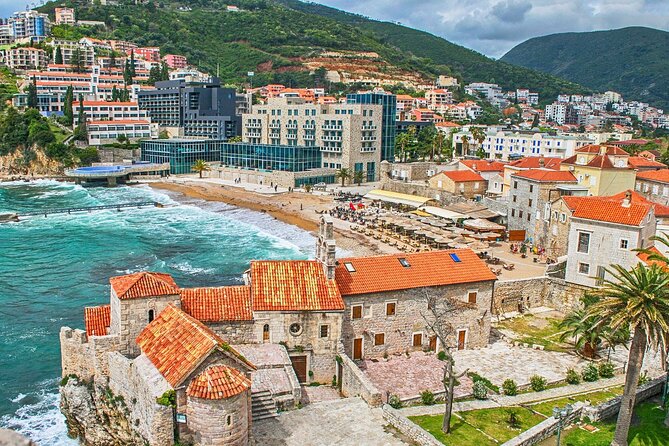
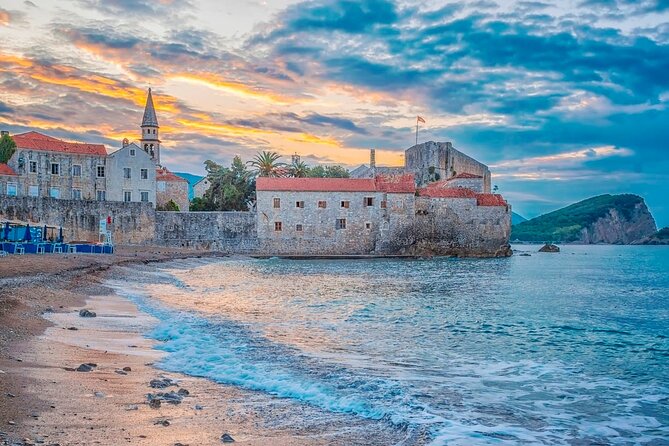
Day 4 strings together several different moods. Budva offers a compact medieval center beside a modern resort town filled with newer buildings, shopping, restaurants, and bars. The old town includes St. Ivan Church and St. Mary’s Church, but the stop lasts about an hour, so your time is limited.
Sveti Stefan is a photo stop rather than a full visit. The former fishing settlement on an island is now an exclusive residential resort and cannot be visited as part of this route. You will see it from the coast for about 30 minutes.
In Shkoder, Albania, Rozafa Castle gives you broad views toward the lake and the meeting point of three rivers. The city’s Venetian influence and long history of settlement help introduce you to northern Albania. The included visit to a handmade Venetian mask workshop is one of the route’s more unusual additions. You can watch papier-mâché masks being painted and decorated by hand, then decide if one deserves space in your suitcase.
From Mrizi i Zanave to Prizren and Decan
Mrizi i Zanave is more than a lunch suggestion. This slow-food agricultural farm collects, prepares, and preserves local organic products. You learn how the family adapted old communist-era buildings for storage and how the business created jobs for more than 400 people in nearby communities.
The visit lasts about an hour, with free time for lunch or shopping. Lunch is not included, but this is a good place to spend some of your food budget. It connects what you eat with local farming and gives you a look at a working business rather than another historic facade.
Prizren is one of the route’s most rewarding town stops. Its river, stone bridges, Ottoman buildings, religious sites, and old streets make it easy to explore on foot. The two-hour visit includes the Sinan Pasha Mosque, whose colored patterns and arabesque decoration give it special appeal.
Kalaja Fortress sits above town and offers a wide view over Prizren. Reaching it involves an uphill walk, so wear shoes with a firm sole. You then have free time to eat, shop, or wander. Prizren is also known for filigree metalwork, so keep an eye out for local artisans and small handmade pieces.
The following day brings Gjakova’s old bazaar, rebuilt after repeated destruction during the Balkan wars, World War II, and the Kosovo War. The one-hour stop gives you a chance to browse traditional crafts and watch workshop activity.
Decan Monastery is another important stop. Orthodox monks still live there and produce food such as cheese. Its 14th-century frescoes earned UNESCO recognition in 2004, and the visit offers a close look at Byzantine painting and religious life.
Rahovec adds wine to the route. Grapes have been grown in the valley since Illyrian times, and vineyards sit on low hills at roughly 350 to 520 meters. The visit lasts about an hour, though wine tasting is not specifically listed as included. Ask your tour leader what is available on the day.
Something different for another day:
- Blue Cave Small-Group Boat Tour from Dubrovnik
★ 5.0 · 9,360 reviews - Full-Day Dubrovnik Elaphite Islands Cruise with Lunch and Drinks
★ 5.0 · 8,823 reviews - Dubrovnik: Epic Game of Thrones Tour + Lokrum & Saver Option
★ 4.9 · 5,995 reviews - Dubrovnik: Elaphiti Islands Full-Day Cruise with Lunch
★ 5.0 · 5,938 reviews
Kruja and Tirana: Albania through food and memory
Kruja rises on rocky ground above central Albania and is tied to the country’s resistance against Ottoman expansion. Its medieval bazaar is one of the oldest and largest in the Balkans, with narrow lanes, wooden shops, carpets, jewelry, and handmade souvenirs.
The castle visit lasts about an hour and includes local paths once used to leave the fortress unseen during attacks. That detail gives the site a human scale. You are not just looking at defensive walls; you are hearing how people moved through them.
Kruja also gives you free time for lunch and shopping. This is one of the better places to buy a tangible souvenir, but compare prices and inspect handmade goods carefully before buying.
Tirana takes a different approach. Instead of a conventional monument tour, you meet a local companion for a food-focused walk. You try byrek, a pastry made with thin layers of dough and fillings such as cheese, meat, or spinach, then visit Çam Bazaar for produce, household items, clothing, and everyday market life.
The food tour continues through Pazari i Ri, or the New Bazaar, where you sit down to a traditional Albanian meal and sample grape raki. The two-hour market and meal portion gives Tirana a more personal feel than a quick bus stop.
Come hungry. Also remember that the food tour is included, but other meals are not. If you prefer vegetarian food, the route can work well: a separate customized trip using this company’s services arranged plenty of vegetarian choices, though that does not guarantee identical menus on this departure.
Ohrid and the quiet lakeside interlude
Day 9 crosses into North Macedonia and begins in Struga, where you stop for a drink near the source of the Drini River. The visit is brief, but it breaks up the drive toward Ohrid.
Ohrid and Lake Ohrid are UNESCO-listed and provide one of the trip’s most relaxing settings. You visit the viewpoint at St. John at Kaneo, then walk through the old town’s steep lanes and distinctive houses. The city is linked with 365 Orthodox churches, one for each day of the year, and its lake views are among the route’s most memorable.
A handmade paper workshop adds a tactile stop. At the National Workshop for Handmade Paper, you learn a paper-making method that dates to Gutenberg’s era and can buy a sheet as a small keepsake.
Day 10 begins at St. Naum Monastery, beside the source of the Crni Drim River. The springs, greenery, and mountain views make this a calm and photogenic visit. Admission is included.
After crossing into Albania, Tushemisht gives you time with local sellers offering preserves, honey, herbs, and handmade items. Drilon National Park follows, with spring-fed water, willow trees, and a small lake. These stops slow the rhythm before Berat, although the itinerary still keeps you moving.
Berat, Gjirokaster, and Albania’s stone towns
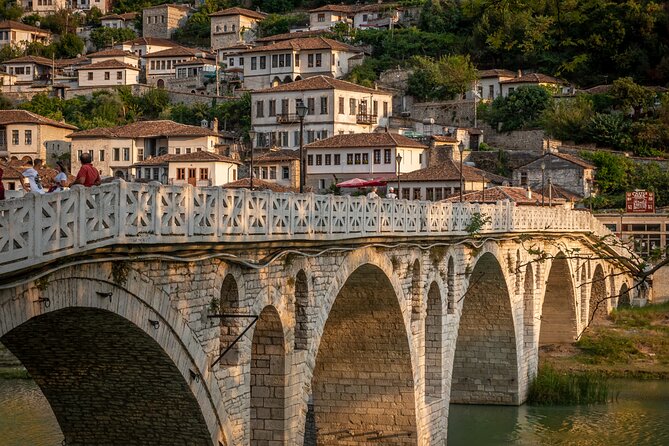
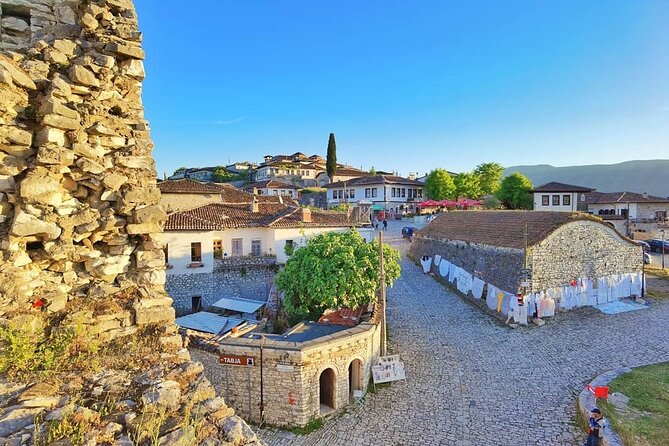
Berat is called the town of 1,001 windows because its old houses climb the hills in layers. The town’s roots reach back to an Illyrian settlement, and people still live inside the castle walls.
Berat Castle, included in the tour, contains churches, mosques, museums, old homes, and reminders of the communist period. The climb and stone streets require steady footing, but the views repay the effort.
The Onufri Museum adds an artistic focus. The painter Onufri is known for a distinctive red pigment used in church painting, and the museum helps explain why Berat is important beyond its architecture.
A walk through the Gorica neighborhood and across or near the Gorica Bridge completes the day. Berat receives several stops, but the individual time blocks are short. You will see a lot, though you may wish for more time to simply sit in the old town.
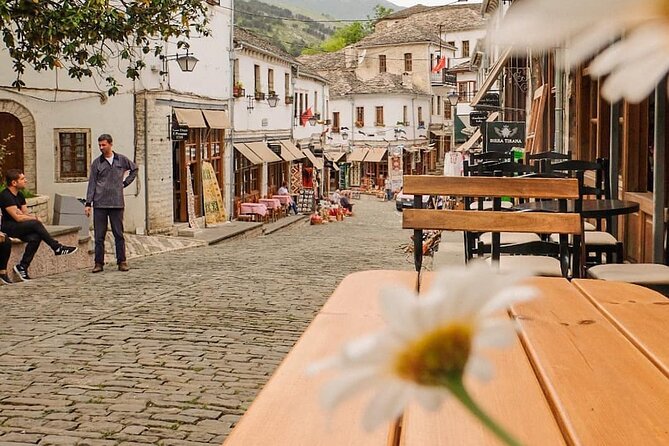
Gjirokaster, the Stone City, is another UNESCO-listed town built on steep ground. Its houses resemble small fortresses, while the old bazaar and castle dominate the visit. You get about three hours between the town walk, bazaar, historic house, and castle area.
The preserved house visit is especially useful because it shows domestic life in original surroundings. Gjirokaster also has strong folklore traditions and hosts a major festival every five years, though festival timing is not part of the standard tour.
The Barrels family winery provides a countryside lunch setting. Lunch is not included, but this is another chance to try local flavors in a family-run setting before the road north into Greece.
Ioannina and Meteora: a dramatic final act
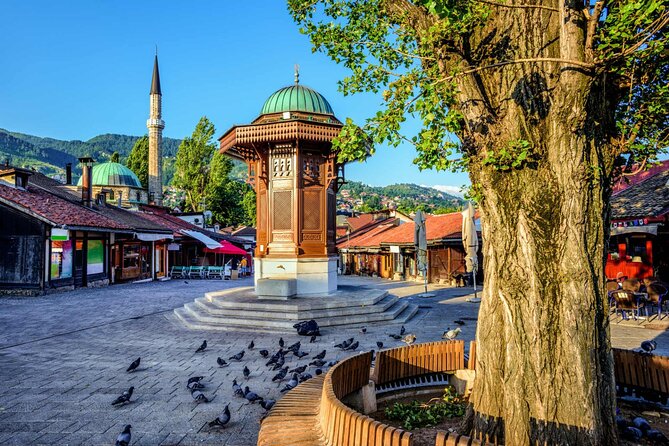
Ioannina introduces Greece through its old town and Byzantine-era castle. You can walk narrow streets, see Ottoman and Byzantine traces, and pause at a cafe for local food. The listed visit is about an hour, so the stop is more orientation than full exploration.
Meteora provides the visual climax. Monasteries sit on towering rock formations, and the tour is timed to include a sunset view. Admission is included, but the two-hour visit may feel short if you want to enter several mountaintop monasteries.
This is one place where expectations matter. You will see the remarkable setting and likely enjoy the sunset, but you may not have enough time for a broad monastery visit. Ask in advance which sites are planned and how much walking or climbing is involved.
On Day 14, the tour leader drops you at your Athens hotel. An alternate ending takes you to Igoumenitsa Port, with ferry tickets included for the crossing to Corfu. Confirm which ending applies to your booking, since the two options lead to different final arrangements.
Is the $6,020.56 price good value?
The price is high, but the package covers a lot: 13 breakfasts, three-star accommodation, private transportation, tour leader services, entrance tickets for scheduled sites, tourist taxes, road taxes, fuel, international car insurance, and hotel pickup and drop-off.
The semi-private format matters. A maximum of 10 people allows more room for questions and easier movement than a large coach. Past departures have also used four-star hotels despite the stated three-star basis, but you should treat that as a pleasant possibility, not a promise.
You still need money for lunch, dinner, drinks, snacks, souvenirs, and personal costs. The route also includes long driving days, so part of what you are paying for is the convenience of having someone handle borders, navigation, fuel, and road logistics.
Guides named in past departures include Sokol, Neli, Neli, Gerion, Juli, and tour leader and driver Eri. Sokol received especially warm praise for making the trip fun, while Eri was noted for handling narrow steep roads and traffic with care. Guide assignments can change, so consider those examples rather than guarantees.
Who should book this Balkan road trip?
I would recommend it if you want to see a wide slice of Southeast Europe in one carefully arranged journey. It suits curious people who enjoy old towns, religious buildings, local food, short walks, changing scenery, and learning how recent conflict still shapes daily life.
It is less suitable if you dislike frequent hotel changes or long drives. The itinerary sometimes gives you only 30 minutes or an hour at a place that deserves much longer. You should also be comfortable with uneven cobbles, hills, castle paths, and early starts.
The tour is conducted in English, confirmation is provided at booking, and most people can participate. You must arrange your own health and travel insurance. The schedule can change because of weather, strikes, holidays, temporary closures, or other outside events.
Because the experience is non-refundable and cannot be amended after cancellation, read the terms carefully before paying. That matters even more for a $6,020.56 commitment.
Should you book it?
Book this trip if your goal is breadth with support. You will see Bosnia and Herzegovina, Montenegro, Kosovo, Albania, North Macedonia, and Greece, with Croatia as your starting point, while a tour leader handles the practical work.
Skip it if you want lingering visits in Sarajevo, Ohrid, or Meteora. For the right person, this is an unusually full introduction to the Balkans, combining castles, mosques, monasteries, farms, markets, wineries, and lake towns in one long route. Pack light, bring good walking shoes, keep your appetite ready, and accept that some of the best moments will happen between the headline sights.
FAQ
How long is the Dubrovnik to Athens tour?
The tour lasts approximately 14 days, beginning in Dubrovnik and ending with hotel drop-off in Athens, unless you select the alternate Igoumenitsa Port to Corfu ending.
What countries does the route visit?
The itinerary includes Croatia, Bosnia and Herzegovina, Montenegro, Kosovo, Albania, North Macedonia, and Greece.
What is the maximum group size?
The tour has a maximum of 10 travelers.
Is transportation included?
Yes. Private transportation, petrol, road taxes, and international car insurance are included.
Are hotels and breakfasts included?
Yes. Accommodation and breakfast are included for all overnight stays, based on three-star hotel accommodation and double, twin, triple, or quadruple occupancy.
Are lunches and dinners included?
No. Lunches, dinners, drinks, snacks, souvenirs, and personal spending are not included.
Is pickup available in Dubrovnik?
Yes. Pickup is offered from the nearest reachable point to your hotel within Dubrovnik Town. Cars cannot enter some sections of Dubrovnik Town.
Is the tour conducted in English?
Yes. The tour is offered in English.
Does the tour end in Athens?
The standard ending is hotel drop-off in Athens. An alternate ending takes you to Igoumenitsa Port, where included ferry tickets allow you to continue to Corfu.
Just added around Dubrovnik
- Dubrovnik Sunset Mountain Tour With Wine★ 5.0 · 9 reviews
- From Dubrovnik: Mali Ston Oyster Paradise Tour with Transfer★ 4.8 · 9 reviews
- Dubrovnik: Private Panoramic Half-Day Buggy Tour with Brunch★ 4.6 · 9 reviews
- Luxury Day tour to Mostar and Kravice waterfalls★ 5.0 · 9 reviews
- Sarajevo & Mostar Private Day Tour from Dubrovnik★ 4.5 · 9 reviews
- Blue Sea & Black Mountains – Montenegro★ 5.0 · 9 reviews
- Montenegro from Dubrovnik Private Tour★ 5.0 · 9 reviews
- Ston Oysters & Wine Tasting Tour from Dubrovnik★ 5.0 · 9 reviews
Private, compared.
Mostar and Kravice Waterfalls Tour from Dubrovnik (Semi-Private)
Read our review →
Blue & Green Caves Private Boat Tour with Drinks
Read our review →
Dubrovnik Private Speedboat Tour to Elaphite Islands with Drinks
Read our review →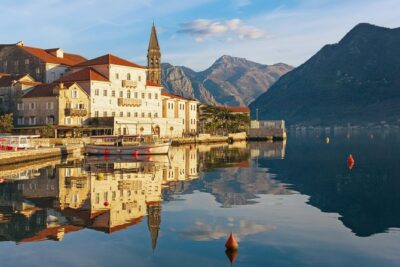
Private Tour: Montenegro Day Trip from Dubrovnik
Read our review →
PRIVATE Walking Tour of Diocletian’s Palace & Old Town
Read our review →
Tour The Game of Thrones – Private Walking Tour
Read our review →
Private Krka Waterfalls tour with 30min Boat Cruse
Read our review →